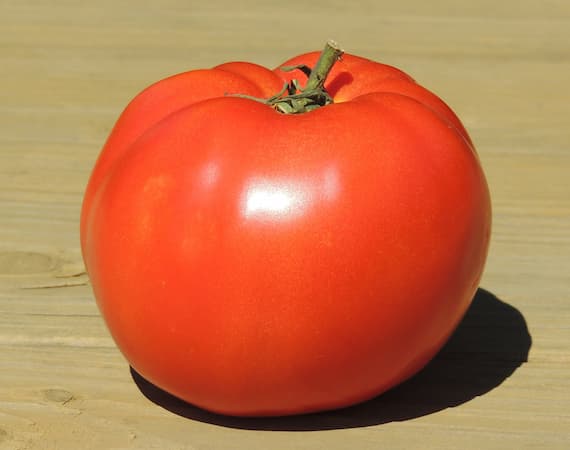
Better Boy tomato is a hybrid variety. It is one of the most popular maincrop varieties of tomatoes. The large fruit of Better Boy tomatoes has superior flavor. The plants are high-yielding. This garden guide shows you how to grow Better Boy tomato plants.
As a hybrid, the Better Boy variety was created sometime in the past 50-60 years.
Better Boy plants are the world record holder for yield from a single plant at over 340 pounds. See tomato trivia
Better Boy Hybrid Tomato Description
Vigorous, indeterminate plants produce an abundance of extra large fruits.
Days to Maturity: 70-75 from setting out transplants.
Many people claim this tomato variety has the best flavor.
The meaty fruit is attractive, with a deep red skin color. Fruits weigh from 12 ounces to up to 1 1/2 pounds.
They are excellent for canning, slicing, salads, or eating fresh from your home garden.
Day to Harvest: 70 to 75 after planting transplants outdoors.
Plant height: Five to eight feet tall.
Light Needs: Full sunlight.
Ideal Soil pH: 6.5 – 7.0
Plant Hardiness Zones: 3 – 11
Deer Resistant? No. Deer enjoy munching on the tender young tips of the plant.
Plant Type: Annual
Native To: South America.
Botanical Name:Solanum lycopersicum
Nutrition Facts
While tomatoes were once considered toxic, there are many health benefits of consuming them. So, we recommend consuming them every day.
One small tomato contains approximately:
18 calories
3.9 g carbs
0 cholesterol
0.2 g fat
1.2 fiber
0.9 g protein
Did You Know? Tomatoes are 95% water. However, the remaining 5% is primarily carbohydrates and fiber.
How to Start Tomato Seeds
Tomato plants are usually started indoors. Planting tomato seeds is an exciting time. All in all, this is one of the very first gardening projects of the year. After a long winter, you are itching to get your hands back into some “dirt”.
Begin starting tomato seeds indoors in small containers, eight to ten weeks before the last frost date for your area. First, select sterile containers. Then, sow tomato seeds about 1/8″ inch deep, using seed starting soil. Seeds will sprout in 10-14 days, depending upon soil temperature. Sprouting tomato seeds is quicker and more productive when using a heated germination mat.
As soon as the seedlings emerge, they need full sunlight to grow sturdy. Lack of sunlight causes the plants to grow “leggy”. Because of this, we highly recommend using grow lights to supplement the amount of available sunlight.
Tip: To help your plants grow sturdy, place a small fan on low nearby. Or, another way is to lightly brush the tops of the plants with your hands a couple of times each day.
How to Grow Better Boy Tomato Plants
Learn all about growing monster tomatoes:
How to Grow Tomatoes – From planting seeds to harvesting fruit, we’ve gotcha covered.
Staking Tomato Plants – Large plants and huge tomatoes require a sturdy tomato cage or staking to help avoid plant disease and keep fruit off the ground.
Plant Problems and Disease – Above all, remember the old saying “an ounce of prevention is worth a pound of cure.”
Tomato Cages and Staking Plants
Tomato Cages and Staking – Maximize your crop, and minimize disease and insect damage, by staking or caging tomato plants. They will reward you with more tomatoes. The fruit will be cleaner, as they will not be sitting on the soil. More on staking tomatoes.
Plant Maturity and Days to Harvest
Better Boy tomatoes require 70-75 days from transplanting young seedlings outdoors to produce the first fruit.
Days to harvest (or maturity) are counted from the time tomato plants are set out into the garden. The range is broad, as there are many varieties. Generally, cherry tomatoes ripen first, followed by early varieties. Beter boy tomatoes require a longer time to grow and ripen than most.
The race is always on in my neighborhood to get the first ripe tomato of the season. Thus, I plant a nmber of varieties, including ones with shorter days to harvest. Whereas Better Boy tomatoes may not be the first to ripen, they are certainly among the best for taste.
Insects and Pests
Tomato plants can experience insect problems with tomato hornworms, cutworms, and a few other garden pests. Further, don’t make it too easy for garden pests to reach your tomatoes. If they are not staked or caged, then snails and slugs will munch on the ripening fruit at ground level. Most important, avoiding problems is much easier than fixing them.
Birds will occasionally peck holes in red fruit.
Did you Know? Tomato plants emit a mild toxin that discourages many small insects from bothering them. This toxin can also cause skin itching and irritation.
About Tomato Hornworms – If tomato hornworms are present in your area, then this article is a “must read”.
Did you Know? Tomato plants (not the fruit) are used to make an organic insect repellent. See Tomato “Juice” Spray
How to Grow Tomatoes - Plant Disease
Several plant problems can arise, usually in the mid-summer heat and humidity. Blights and fungus infections can occur in high humidity. Early treatment with fungicides is effective. Spacing plants too close cuts down air circulation and promotes disease.
Blossom end rot can also affect the fruit. This is a round, brown, indented spot on the bottom of the tomato. It is caused by either uneven watering or a lack of calcium in the soil. More on Blossom End Rot.
Tip: Do not water at night if possible in hot and humid weather if possible. Moisture and humidity combined with high temperatures promote plant diseases. Therefore, if possible, water directly to the roots.
Unquestioningly, tomato plants like it hot! (Of course, extreme heat is another story). Without a doubt, the plants do not like cold weather. They will die if exposed to frost. So, make sure to plant them after the last frost date in your area.
Tip#1: Cover your young seedling if frost is predicted. A simple and easy cover for small seedlings is to buy large or extra large plastic disposable cups. Place them over the seedling at dusk, and remove them in the morning. It is usually little or no wind on nights with frost, so they are not easily tipped over.
Tip#2: If you get a light frost overnight and you did not cover up your plants. Go out early before the sun rises, and spray your plants with the garden hose. This melts the ice off the plants and may save them.
Harvesting and Storing Tomatoes
Tomatoes store well in a cool, dry location. Do not put them in the refrigerator. While they last longer in the refrigerator, they will lose their flavor and texture. Keep them out of direct sunlight.
Just before frost, pick tomatoes while they are still green or orange. First, wash them thoroughly. Second, rinse in a light solution of 1 gallon of water and a tablespoon of bleach. This kills off bacteria that rot the fruit. Then, allow them to dry. Finally, put them in a cool, dry, dark place.
To ripen tomatoes indoors, bring a couple at a time to a warm, sunny window.
Are tomatoes a fruit or a vegetable? It’s a frequently asked question. While we all grow tomatoes in our vegetable garden, they are classified as a fruit. The U.S. Congress debated this in 1893.