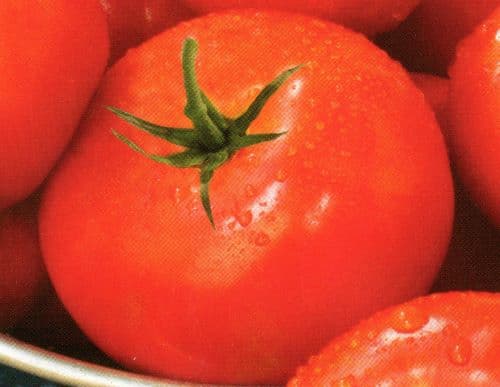
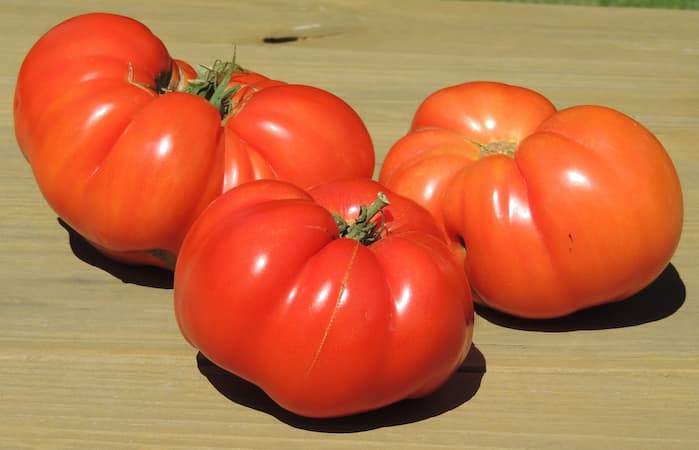
When we speak of a beefsteak tomato cultivar, we’re really talking about a family of tomatoes. These huge varieties produce the largest fruit of all tomatoes. By definition, beefsteak tomatoes weigh a pound or more, with some varieties producing fruit weighing over two pounds. This guide on how to grow beefsteak tomatoes will have you growing huge ones, too!
Many say beefsteak tomatoes produce the perfect sandwich tomato, as one slice covers the entire sandwich.
Did You Know? While they are popular in the home garden, Beefsteak tomatoes are not popular as a commercially grown crop.
The most common varieties are Beefmaster, Beefsteak, Brandywine, Mortgage Lifter, Oh Heart, and Cherokee Purple.
Beefsteak Tomato Description
Vigorous, indeterminate plants produce an abundance of extra-large fruits. Healthy vines will produce up to frost.
Days to Maturity: 80-90 from setting out plants into the garden.
Good tasting, large to extra-large fruit, in many colors. The fruit often is ribbed and contains numerous seed compartments. Fruits weigh from 1 to 2 pounds.
They are excellent for slicing, sandwiches, salads, or eating fresh from your home garden.
Nutritional Value
One ripe large Beefsteak Tomato contains approximately:
33 calories
7.1 g carbs
0 cholesterol
0.4 g fat
2.2 g fiber
1.6 g protein
9 mg sodium
Beefsteak Tomato Plant Specifications
Days to Harvest: 80 to 90 days after transplanting seedlings into your garden, depending upon variety and growing conditions.
Deer Resistant? No. Deer may nibble on the plant’s tender growing tips, especially if other food sources are scarce.
Botanical Name:Solanum lycopersicum
How to Start Tomato Seeds
Tomato plants are usually started indoors. Planting tomato seeds is an exciting time. It is one of the very first gardening projects of the year. After a long winter, you are itching to get your hands back into some “dirt”.
Begin starting tomato seeds indoors in small containers, eight to ten weeks before the last frost date for your area. Sow tomato seeds about 1/8″ inch deep, using seed starting soil. Seeds will sprout in 10-14 days, depending upon soil temperature. Sprouting tomato seeds is quicker and more productive when using a heated germination mat.
As soon as the seedlings emerge, they need full sunlight to grow sturdy. Lack of sunlight causes the plants to grow “leggy”. Use grow lights to supplement the amount of available sunlight.
Tip: To help your plants grow sturdy, place a small fan on low nearby. Or, lightly brush the tops of the plants with your hands a couple of times each day.
How to Grow Beefsteak Tomato Plants
Planting and Soil Needs
Growing Beefsteak tomato plants is easy. It’s one reason for their popularity in your home garden. Of course, another reason for growing them in your vegetable garden is because they taste good.
Select a planting site where your plants will receive full sunlight. The plants grow their best in loose, rich, and well-draining soil. Mix plenty of compost into the soil. Next, mix in a general-purpose fertilizer that is high in nitrogen.
Just before transplanting tomato seedlings in your garden, “harden off” seedlings by bringing them outside during the daytime and for increasing hours, until you are leaving them out overnight. Use of a cold frame is recommended, but not a requirement. If frost is predicted, bring them indoors.
On planting day, pour liberal amounts of water with a soluble liquid fertilizer on the seedlings. Plant them in the garden carefully. To minimize transplant shock, avoid disturbing the roots.
Final spacing for these big plants is 24 to 30 inches apart, in rows 36″ apart.
Light Requirement
Grow Beefsteak tomato plants in an area of your garden where they will receive at least eight to ten hours of bright, direct sunlight. For optimal growth and the maximum production of fruit, provide them with full sunlight from sunrise to sunset
Fertilizer Needs
If you want to grow huge Beefsteak tomatoes, then you need to have a regular fertilizer routine because these tomato plants are heavy feeders.
Fertilize the plants regularly. Early applications should be high in nitrogen. Importantly, as blossoming occurs, switch to fertilizers that are higher in Phosphorus and Potassium. Too much Nitrogen fertilizer results in lots of lush green leaves, and little fruit. A fertilizer specifically formulated for tomatoes will help to maximize your crop.
You can also apply a liquid fertilizer. Spray the leaves of the plants. The leaves will absorb the nutrients. As a result, the leaves turn a deeper, healthier green color and more efficiently uses the sun’s rays.
Water Needs
Keep your tomato plant well-watered. The goal is moist, but not wet soil all season long. As the season progresses, the roots go deep in search of moisture. Thus, in mid- summer deep watering is preferable over more frequent, light watering. You want moisture to go deep to all the roots of the plant. Water directly to the roots. Keep water off the leaves if at all possible. Tomatoes are susceptible to plant disease that grows in wet, humid conditions.
Other Steps
Weeds will compete with your Tomato plants for nutrients and soil moisture. Thus, keep the planting area well-weeded during the entire growing season.
Most varieties of tomato plants grow tall, three to five feet or more. Therefore, the plants need support. If you use tomato cages, don’t be surprised if the plants grow much taller than the top of the cage. We recommend growing them along a fence or loosely tied to a tall stake. Use jute strips of cloth, a soft rope to tie the plants to the fence or stake. More on staking tomatoes.
Mulch around the plant to retain soil moisture, and to keep the weeds down.
Learn more about growing monster beefsteak tomatoes:
How to Grow Tomatoes – From planting seeds to harvesting fruit, we’ve gotcha covered.
Staking Tomato Plants – Large plants and huge tomatoes require a sturdy tomato cage or staking to help avoid plant disease and keep fruit off the ground.
Plant Problems and Disease – Above all, remember the old saying “an ounce of prevention is worth a pound of cure.”
Insects and Pests
Tomato plants can experience insect problems with tomato hornworms, cutworms, and a few other garden pests. Also, if not staked or caged, snails and slugs will munch on the ripening fruit.
Birds will occasionally peck holes in red fruit.
Did you Know? Tomato plants emit a mild toxin that discourages many small insects from bothering them. This toxin can also cause skin itching and irritation.
Did you Know? Tomato plants (not the fruit) are used to make an organic insect repellent. See Tomato “Juice” Spray
Tomato Cages and Staking Plants
Tomato Cages and Staking – Another important step in growing Beefsteak tomatoes, is to stake or cage them. Maximize your crop, and minimize disease and insect damage, by staking or caging tomato plants. Above all, beefsteak tomato plants will benefit. They will reward you with more tomatoes. The fruit will be cleaner, as they will not be sitting on the soil. More on staking tomatoes.
Plant Maturity and Days to Harvest
Beefsteak tomatoes require 80-90 days from transplanting outdoors to produce the first fruit.
Days to harvest (or maturity) are counted from the time tomato plants are set out into the garden. The range is broad, as there are many varieties. Generally, cherry tomatoes ripen first, followed by early varieties. Beefsteak tomatoes require the longest days to maturity.
The race is always on in my neighborhood to get the first ripe tomato of the season. Most of us also grow and await the beefsteaks. One slice from these delicious beauties more than fills a sandwich.
How to Grow Tomatoes - Plant Disease
Several plant problems can arise, usually in the mid-summer heat and humidity. Blights and fungus infections can occur in high humidity. Early treatment with fungicides is effective. Spacing plants too close cuts down air circulation and promotes disease.
Blossom end rot can also affect the fruit. This is a round, brown, indented spot on the bottom of the tomato. It is caused by either uneven watering or a lack of calcium in the soil. More on Blossom End Rot.
Tip: Do not water at night if possible in hot and humid weather if possible. Moisture and humidity combined with high temperatures promote plant diseases. If possible, water at the roots.
Tomatoes like it hot! They will die if exposed to frost. Make sure to plant them after the last frost.
Tip#1: Cover your young seedling if frost is predicted. A simple and easy cover for small seedlings is to buy large or extra large plastic disposable cups. Place them over the seedling at dusk, and remove them in the morning. It is usually little or no wind on nights with frost, so they are not easily tipped over.
Tip#2: If you get a light frost overnight and you did not cover up your plants. Go out early before the sun rises, and spray your plants with the garden hose. This melts the ice off the plants and may save them.
Harvesting and Storing Tomatoes
Beefsteak tomatoes store well in a cool, dry location. Do not put them in the refrigerator. While they last longer in the refrigerator, they will lose their flavor and texture. Keep them out of direct sunlight.
Just before frost, pick tomatoes while they are still green or orange. Wash them thoroughly. Rinse in a light solution of 1 gallon of water and a tablespoon of bleach. This kills off bacteria that rot the fruit. Allow them to dry, then put them in a cool, dry, dark place.
To ripen tomatoes indoors, bring a couple at a time to a warm, sunny window.
Are tomatoes a fruit or a vegetable? It’s a frequently asked question. While we all grow tomatoes in our vegetable garden, they are classified as a fruit. The U.S. Congress debated this in 1893.