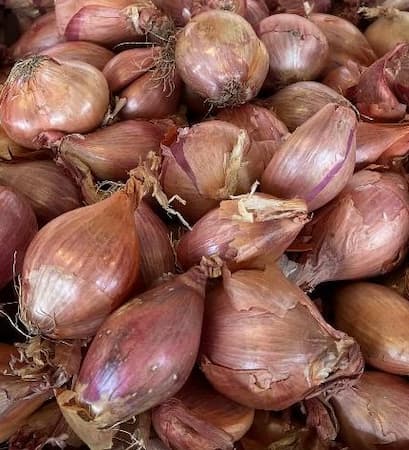
Every gardener knows there are a lot of reasons for growing onions. First, they are easy to grow. Second, they have a fairly short growing period. Importantly, they take up little space. With just one square foot of garden space, you can grow several plants. As a result, even the most space-limited gardener usually finds a little space for growing onions. Use his guide on ” How to Grow Onions”, to grow a great crop.
Members of the onion family bring tears to your eyes, literally. Tears aside, they are a popular vegetable and a favorite of the home gardener. If they make you cry, why do so many home gardeners grow onions? There are lots of reasons. Maybe it’s because they are easy to grow, take up little space in the home garden, and have lots of culinary and medicinal uses. Is that enough reasons!?!
Onions have a place in a tremendous number of recipes from main courses to soups and salads, dips, and hors d’oeuvres. It is used in breakfast, lunch, and dinner recipes. You will find them in bread and snacks. We once thought the only thing they were not used in was dessert. Then, a reader led us to onion dessert recipes!
Tip: There are lots of ideas to help avoid tears while cutting onions. Try chewing gum. Others have suggested chewing bread, taffy, etc. One way to assure you won’t get all teary-eyed chopping them is to have someone else chop them for you!!!!
Onions are also good for your health. They were once believed to ward off evil spirits. (We believe Garlic is more effective at warding off demons). Also, they have medicinal value, too. Recent medical studies suggest onions help to lower cholesterol and reduce the risk of heart disease.
Did You Know?
If you don’t have a vegetable garden, place a few in your flower garden. And, if you rent, put a few in a planter pot or box. Then, set it on the deck or in a sunny window. Yes, you can grow onions just about anywhere.
Types of Onions
There are plenty of varieties to grow. Here are the basic categories:
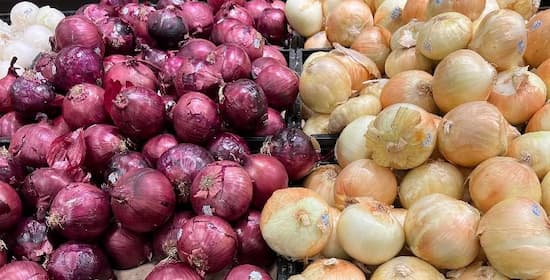
Common Slicing Varieties: – White and Yellow, or Spanish
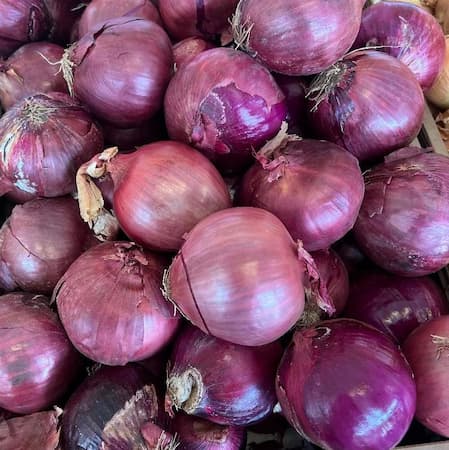
Purple – our favorite with its mild taste. And it is easier on the gastrointestinal system
Leeks – Like scallions, it is mild, yet distinctive tasting. The stalk is eaten.
Vidalia – defined more by where they are grown, than the variety.
A Little Pungent Trivia: Onions help reduce cholesterol if eaten after a fatty meal.
Garden Tip: To get an early start, buy onion seeds as early as possible. Place a few in some moist (not wet), loose starting mix, or potting soil about two to three weeks before you can set them outdoors. They will sprout and develop a good roots system for an early start.
For the Record: The World’s Largest onion weighed 18 pounds 11.84 ounces. It was grown by Tony Glover of the United Kingdom. It was officially weighed on September 12, 2014.
Nutritional Value
One medium raw onion contains approximately:
44 calories
10 g carbs
0 cholesterol
0.1 g fat
1.9 g fiber
1.2 g protein
5 mg sodium
Long Day or Short Day Onions?
Most varieties begin to form a bulb when the temperature and hours of daylight reach certain levels.
“Long Day Bulbs” begin to form a bulb, when there are 14-16 hours of daylight. Long day varieties include Sweet Spanish and Walla Walla.
“Short Day Bulbs” will begin to bulb when there are 12 – 14 hours of daylight hours. Short-day varieties include Yellow Granex, Texas Grano, Red Burgundy, Yellow Stuttgarter type, and White onions (Ebenezer).
Toxicity: It is important to note that shallots are toxic to dogs, cats, and other pets.
Onion Seeds, Bulbs or Sets?
Home gardeners have three choices for starting plants: seeds, small plants, and sets (or bulbs). Seedling transplants give you a jump start on growing and are hardy. They can be bought at a garden store or bought mail order.
Onion Seeds – They take the longest to harvest and are usually started indoors. But, you get the fun of watching them grow from planting to harvest. And, it is the cheapest option, too.
Small Plants – Garden stores sell them in small bundles. These small plants were grown by nurseries to a small size big enough to handle. The top of the plant is trimmed off. The roots are still attached. The onion plants grow quickly, as they already have a root system. you can space them properly at planting time.
Bulbs (also called Sets) – These are perhaps the most popular. Bulbs are easy to handle. And you can get the proper spacing without spending time thinning plants.
How to Grow Onions - Season Long Care
Light Requirements
Select a growing location where your Onion plants will receive at least six to eight hours of bright, direct sunlight. For optimum growth, plant them where they receive sun from sunrise to sunset.
The plants tolerate a little shade. Yet both the plants and bulbs will grow smaller.
Planting and Soil Needs
Growing all varieties of onions is easy. And they take up very little space. Plant and grow them like garlic or onions.
The plants grow best in rich, loamy garden soil. However, they tolerate average soils, too. For the best results, mix in plenty of rich compost at the panting site. In poor soils, also mix in a general-purpose fertilizer when panting them.
The best time to plant shallot bulbs in the fall. They can also be planted in the Spring. Plant cloves 6″-8″ apart, sowing them just below the surface, with the pointed end up.
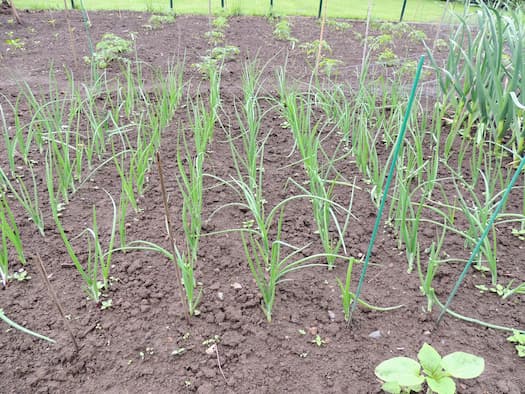
Plant onions 3 to 4 inches apart, in double rows six to ten inches apart. Leave enough room to get between the rows to allow room to weed around the plants.
The trick to big onions is to get the plant to grow really big, before forming a bulb.
Fertilizer Needs
To keep onion plants growing strong and healthy, apply a general-purpose fertilizer one a month. If the soil is poor, apply fertilizer every three weeks.
Water Needs
Keep the soil moist to slightly dry, but not wet, during the entire growing season.
The plant shows few signs of needing water. During extended dry periods, the tip of the plant will turn brown. It is the only tell-tale sign that the pant needs water.
Other Steps
Nature sends a message to the plant to form an onion bulb. that signal is warm-up and longer daylight hours. Onions are biennials. They will go to seed in the second year, sending up a tall, hard stalk with a seed pod. Many growers do not know this, as we harvest them in the first year. Occasionally, the plant goes to seed in the first year.
Weeds compete for much needed nutrients and water. So, keep the area well-weeded. For the best results, remove competing weeds regularly.
Also, add a layer of mulch. It helps to retain soil moisture. And it will keep weeds down.
If seed pods begin to develop, remove them. This encourages the plant to continue to send energy and grow the bulb. If you want to harvest seeds for next season, leave a few seed pods on a couple of plants.
Most members of the onion family are resistant to insect problems. ON occasion, r0ot maggots attack the bulbs. Tiny thrips are an occasional problem. Insecticidal soap sprays or Sevin are very effective.
Did you know? Onion, garlic, and even chives are an ingredient in several organic insect sprays.
Plant Disease
The onion family is resistant to most diseases. While they are resistant, there are several potential ailments. Wet, and humid weather can increase the likelihood of disease.
Onion bulbs can be harvested and eaten at any stage in their growth. Harvest young plants and bulbs as green onions. Then, as the bulb grows, pick them as needed, for cooking and eating.
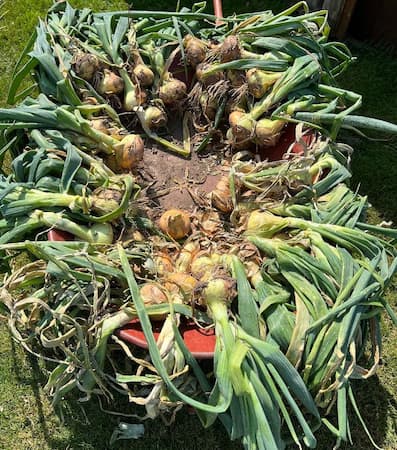
When the bulbs mature, the plant will turn brown and fall over. Keep the plants in the garden for another 7-10 days, to allow them to begin dry.
Harvest the bulbs on a sunny day. Loosen the soil around the bulb with a shovel or pitchfork. Pull onions out of the soil. Now, clean off the bulb. It is okay to rinse off dirt, although some sources suggest this is a “no-no.” Allow the bulbs to dry in the sun.
Most onions store well. For long-term storage, the bulbs must be “Cured”. This is a process of drying out the bulbs, in preparation for storage.
Onion plants are as hardy as they come. Frosts, freezing temperatures, and even snow will not kill them. It will only slow their growth, until warmer weather returns. Extended cold below 20-25 degrees, however, can kill them, if they are growing when exposed.
Tip: Chives are a quick-growing member of the onion family. Plant chives amidst your flower or herb garden once and grow for decades. Plant it along the wall of a house and you extend the season. Chives can also be grown in a sunny window all winter long. More on chives.
Did You Know? We have over 350 garden recipes and growing! We’ve got recipes for all of your favorite vegetables, fruits, and even edible flowers, too.