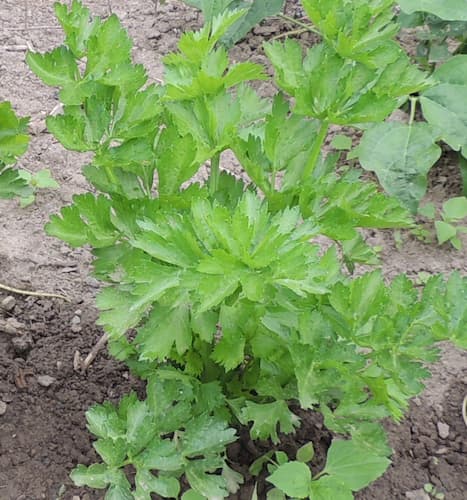
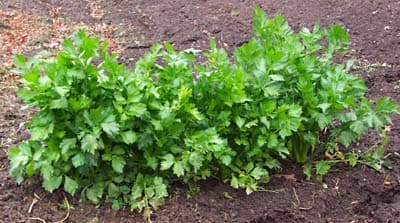
Want to learn how to grow celery? You’ve come to the right place. Use this guide to learn how to grow celery in your home garden. It helps both new and experienced gardeners, too.
Celery is a vegetable that is popular with the health-conscious. The stalks are almost absent of calories yet contain important vitamins and minerals. Celery has a very mild flavor. Some people complain that it has little, or no taste. Fresh garden-grown celery usually has a stronger, pleasant flavor. And the mild taste is what makes celery stalks such a great tool for dipping into your favorite dip, salad dressing, or sauce. Also, it adds a little crunch to recipes, too.
Did you Know? Does celery have negative calories? Being almost absent of calories, the process of eating consumes calories, netting you a negative calorie meal or snack!
Surprisingly, Celery is not commonly found in the home garden, even though is a very common item in the grocery store. This is because it is more difficult to grow than the common garden fruits and vegetables. In addition, it has a long growing season. It grows best in cooler weather. Celery originated in wetland areas. Consequentially, it requires lots of water. Without the proper care, Celery stalks can be very dry and stringy.
The more demanding conditions and attention that celery needs sometimes causes home growers to rise to the challenge. Some growers look for a different vegetable or variety each year, as a challenge to their gardening skills. Why not make growing celery your next challenge? We know you can do it!
Celery originated in the Mediterranean. It has been grown as a food crop for thousands of years. It has also had many other uses dating back to ancient times, including medicine, funerals, and more.
Varieties of Celery
There are a limited number of varieties on the market.
Varieties that require blanching are little used in the home garden, as they require a lot of extra work.
As previously mentioned, it is difficult to find them in seed catalogs. However, they are usually available as seedlings in garden stores. You may even have to shop around for seedlings as some garden stores do not carry them.
Celery Plant Specifications
Days to Harvest: 85 – 140 days.
Plant height: The plant grows 18 to 24 inches tall.
Plant Type: Biennial, usually grown as an annual in home gardens.
Deer Resistant? Generally, yes. However, they will eat it if other food sources are scarce.
Native To: Mediterranean regions of Europe and North Africa.
Botanical Name:Apium graveolens
Nutrition Facts
Celery is very healthy for you and your family. And, it has very few calories. Therefore, add plenty of it to your diet.
One medium Celery stalk has approximately:
5.6 calories
1.2 g carbs
0 cholesterol
0.1 g fat
0.6 fiber
0.3 g protein
Additionally, it has over 95% water content.
Light Requirements
Plant Celery in a location where they will receive at least six to eight hours of sunlight. Bright, lightly filtered light is best.
In hotter regions of the country, provide light shade during the hot afternoon. Otherwise, the plant can suffer stress, sun scald, and bolting.
How to Grow Celery - Sowing Seeds
We recommend you start seedlings indoors, using a germination mat. The seeds are very tiny, difficult to sow, and require thinning out seedlings. In addition, the longer growing season may necessitate an indoor start in many areas of the country.
Sow celery seeds in individual pots or containers. The seeds are very tiny. Put as few as possible into each pot. Then, after they have germinated and are large enough to thin, remove all but two or three. As they continue to grow, thin to one per pot (individual cell).
Transplant the seedlings outdoors after the last date for frost in your area.
Space plants one foot apart, in rows 2 to 2 1/2 feet apart.
How to Grow Celery - Season Long Care
While Celery is a biennial plant, most home gardeners grow it as an annual. Towards the end of the long growing period, home gardeners harvest the stalks. f they are allowed to grow a second year, the plants will produce flowers and seeds.
Grow Celery in the lowest area of your garden. The plants require lots of water. Make sure to provide plenty of water during the entire growing season, especially during hot, dry weather. If the plants do not get enough water, the stalks will be dry and stringy.
Did you know? Celery plants are native to areas along creeks, where constant moisture is present.
Celery plants are heavy feeders.
Grow Celery plants in full sun, and a rich, garden soil. Add plenty of compost and mulch around the plants to help retain moisture. Use a general-purpose fertilizer as you work the soil before planting and fertilize regularly. Add mulch as needed, to help retain soil moisture and add nutrients.
Late in the season, blanch inner stalks by loosely tying the stalks together with twine.
Are you looking for a fun gardening project!? If so, then grow celery using the base of the plant. It’s easy to do. Here’s how.
First, take a head of celery and cut the base off of a celery plant about two inches from the bottom of the plant. It will not need to have roots already on it.
Next, root the base by placing it in a bowl and adding 1/2 to 1 inch of water.
Then, check periodically to make sure the water in the bowl does not dry out. Add water if needed.
After the base has rooted, plant it in a flowerpot and place the container in a sunny window. Or, plant it outside.
While the rooted base will not grow a new celery plant as large as the original plant, it will grow sufficiently large enough to use,
Insects and Pests
A broad range of insects and pests are attracted to Celery. These include Slugs, Aphids, Leafhoppers, Celery flies, and more. About slug and snail control
Most critters shy away from Celery. And many gardeners will be ecstatic to know, that deer do not eat it!
Plant Disease
Leaf spot and blight are the most common problems. The splitting of stalks is a result of dry weather and too little moisture. As with most plants, blights occur most frequently in wet weather and should be treated early with fungicide. Bacteria can also cause rotting in the center of the stalk.
How to Grow Celery - Harvest Time
Days to Harvest: Approximately 120 to 140 days. The plants are slow growing.
Harvest individual stalks after they are big enough to use for eating fresh, salads, or soups.
Harvest the entire plant after the stalks have reached a foot or more. The outside stalks may be discarded or used in soups. However, they are often undamaged by slugs and other insects. The inner stalks are blanched, more tender, and taste the best uncooked.
Plant Hardiness
Celery plants are one of the hardiest plants in the vegetable garden. So they will survive frosts and light freezes. If frost does damage the plant, the inner stalks should still be good
Health Benefits of Eating Celery
Eating Celery offers several health benefits. They include: