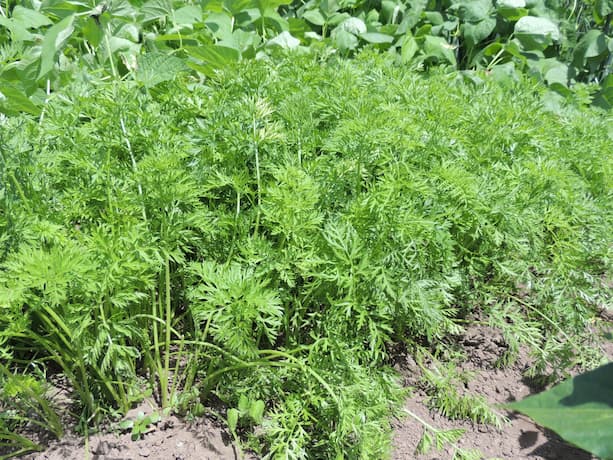
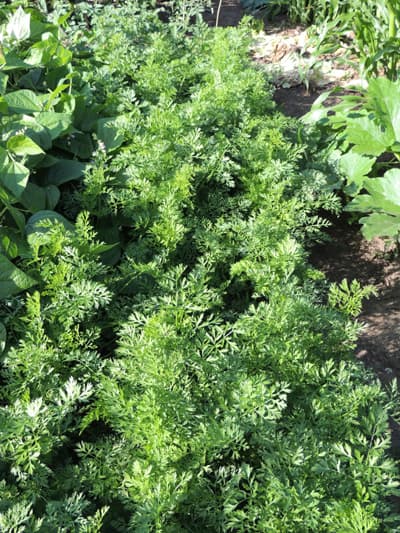
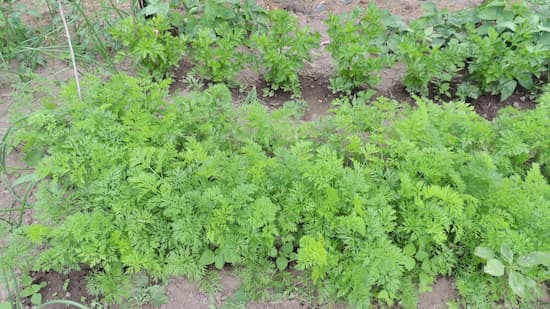
Want to learn how to grow carrots? You’ve come to the right place. Smart, health-conscious gardeners grow them. They are a favorite of weight watchers and a health-conscious crowd. All carrot varieties are loaded with vitamins, and they are nutritious. On top of being good for you, carrots taste good, too. They can be nibbled and munched upon whenever the urge arises.
Bunnies like them, because they know just how good and healthy carrots are. Of course, we know Bugs Bunny likes carrots, too. But, how about you!? Certainly, we hope that you are a fan, because they are very healthy for you and your family.
Varieties of Carrots
There is a variety of carrots for everyone. Carrot varieties are largely categorized by length.
Short varieties come as small as two inches and are as wide as they are long. These are the carrot of choice for gardeners who have hard clay or rocky soils.
The longer varieties do best in rich, well-worked soil rich in compost. The long, fat carrots are the most popular of home gardeners.
While most carrots are orange, there is a yellow and a red variety for those looking for a different type to try.
Baby carrots are a shorter type of carrot.
There is even a Chinese baby carrot to choose from.
Carrots are very healthy for you and your family. Therefore, add plenty of it to your diet.
One medium sized carrot has approximately:
25 calories
6 g carbs
0 cholesterol
0 g fat
1.5 fiber
0.5 g protein
Additionally, it is low in sodium.
Light Requirements
Carrot plants grow best, both above and below ground, when planted in a location where they receive at least six to eight hours of direct sunlight. In hotter climates, the plants benefit with partial shade from the hot afternoon sun.
Tips for Growing Carrots
Work the soil deeply. Remove all rocks and stones.
A loose soil is very important. Add plenty of compost.
Do not add too much nitrogen fertilizer. It results in “hairy” roots.
Water deeply.
Thinning seedlings is a must. Follow the spacing on the seed packet.
Thought for the Day: Carrots may be good for the eyes, but alcohol will double your vision.
How to Grow Carrots - Planting Seeds
Before planting carrot seeds, work the soil deeply. Add liberal amounts of compost. If compost is not available, add peat moss. When growing carrots, it is important to remove any rocks, stones, and debris that may impede the downward formation of the roots. When a root hits an object, forked roots will result.
Carrot seeds are among the smallest, finest of garden seeds. They are very difficult to space. Sow seeds very thinly, about 1/4 inch deep. Cover them with fine garden soil. Or sprinkle them on top of the soil, and lightly water them into the soil. Space rows 1 to 1 1/2 feet apart. For home gardens, we recommend double rows, spaced 1 1/2 feet apart, and then wider rows, to afford easy access.
Broadcast sowing of seeds is also popular with carrots. With broadcast sowing, sprinkle or spread the seeds across the area you are planting. Seeds fall randomly and do not develop in rows.
Whichever method you use, it is important to thin the seedlings before crowding impairs their growth. After the seeds have germinated, thin to two inches apart as soon as possible.
Tip: For a continuous harvest, sow some seeds every two to three weeks.
How to Grow Carrots - Season Long Care
Keep carrots well weeded early in the season. They are easily overcrowded, with any competing weeds usually winning out.
While they may not show it, carrots need a good supply of water, in soil that drains well. They also respond well to fertilizer applied before sowing carrot seeds and a couple of times during the season.
Do not over fertilizer your carrots. Too much nitrogen in the soil results in hairy(fine feeder roots), misshapen carrots.
Tip: Make sure to mark the rows well, as carrots take a long time to germinate. We suggest you plant a few radishes in the rows to “mark” them. After the carrots have germinated, the radishes can be harvested.
The most common problem is the maggot stage of the Carrot fly. This 1/4 inch white maggot eats along the outside of the carrot.
Bunnies are well known to enjoy carrots. While everyone knows bunnies like the roots, they also eat the carrot leaves. Mice and moles will also nip at the tops of the carrot roots.
There are some diseases, particularly viruses, that can occasionally infest your crop. To the home gardener this is usually infrequent, except in wet weather, or poorly drained soils.
How to Grow Carrots - HarvestTime
Days to Maturity: Carrot roots are ready to pick for approximately 65 to 75 days, depending upon variety.
Begin to harvest carrots as “baby” size, thinning the row as you harvest. Once you begin picking, you can harvest as needed. After the plants have died off, the carrots do not need to be harvested right away. They can remain in the soil for weeks or more.
In the “old days” before refrigeration, carrots were kept in the soil, and covered with a thick layer of leaves. Then, they were dug up as needed, for consumption. Carrots kept in the ground will last well into the winter months.
Note: Keeping carrots in the ground for long periods can affect flavor.
Plant Hardiness
Carrots are somewhat hardy. They will withstand cold weather and a light frost.