When it comes to vertical gardening, the sky is the limit. Vertical gardening uses space….literally. Instead of planting horizontally in your garden, a vertical garden grows plants up, or down. To grow vertical gardens, you need some kind of support, to allow your plants to grow upward, instead of along the ground. If you are growing plants down from a deck, you will need a garden planter for the deck.
Vertical gardening is not a new concept. It has been practiced for thousands of years. A garden trellis has long been popular for climbing roses and other vining types of flowers. Trellises date back to at least the Roman Empire. Your parents and grandparents practiced vertical gardening indoors. In the 1950s and 1960s, indoor plant poles were “the rage”. Every home had to have a plant pole with hanging baskets filled with house plants. Whether they knew it or not, they were practicing vertical gardening.
Common examples abound, of supports for vertical gardens. Poles and fencing often come to mind first. Fencing is commonly used to grow vining garden crops like peas, vining varieties of beans, cucumbers, and many squashes. A wide variety of vining flowers grow up with the support of a fence, trellis, or arbor. Poles are also common supports for vertical gardening. The most common example of this is bean poles…. hence its name. Another method of vertical gardening utilizes poles and plastic netting (pest netting). Vining crops grow up the netting and are supported by the netting.
A seemingly unlimited variety of creative planters are available for vertical gardening. Some are attached to walls, for use on patios and balconies. This opens up gardening possibilities to practically everyone.
Vertical Gardens Can Grow Down
Put a planter on a deck. Let a vining flower or vining garden crop, grow downward off the deck. This works great with cucumbers, peas, miniature pumpkins, beans, and vining flowers, like Cardinal Climber, Scarlet Runner Beans, and just about any other flower climber.
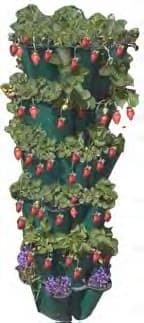
Agro Tower– The Agro Tower is a neat vertical garden planter. The stackable planter, comprised of 19″ X 19′ X 19″ pots, is perfect for limited space. Use an Agro Tower for a wide variety of flowers, vegetables, and herbs. This vertical planter is very popular as a strawberry tower. You can stack three to five heavy-duty pots, to add loads of vertical gardening space.
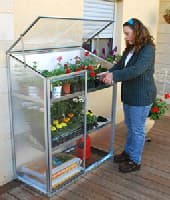
Balcony and Deck Grow Station – Use the Grow Station on your balcony, deck, or patio, to extend the growing season, spring and fall. The Grow Station is a unique combination of a cold frame, a mini-greenhouse, and a work bench. You can also use it as a storage unit. Your seed starts and deck plants will love it. When the weather warms, keep the doors and top open, and use it as a plant rack, to grow your favorite plants.
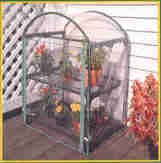
Two Tier Growing Rack Greenhouse – With a removable plastic cover, this unit is great for frost protection. When the weather warms, remove the cover and use it to grow flowers and vegetables on your deck vertically.
Tip: There are 4 tier units on the market. Many manufacturers have stopped making them, as they are VERY susceptible to tipping over in moderate to strong winds.
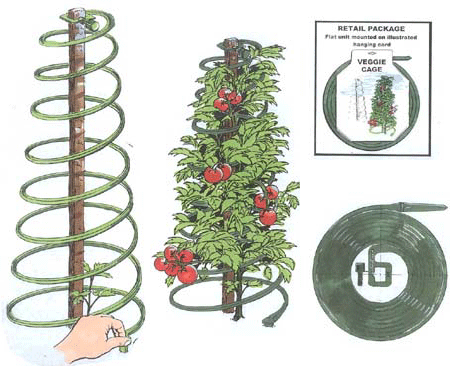
VeggiCage – This revolutionary cage expands a whopping 7ft of vertical gardening! Try them on sweet peas, tomatoes, pole beans, cucumbers, and other climbing flowers and vegetables.
Veggie Rings easily attach to a regular garden stake. Use one, two, or three, to hold up tomatoes, peppers, eggplants, and other plants. The plant’s foliage hides the rings from view.
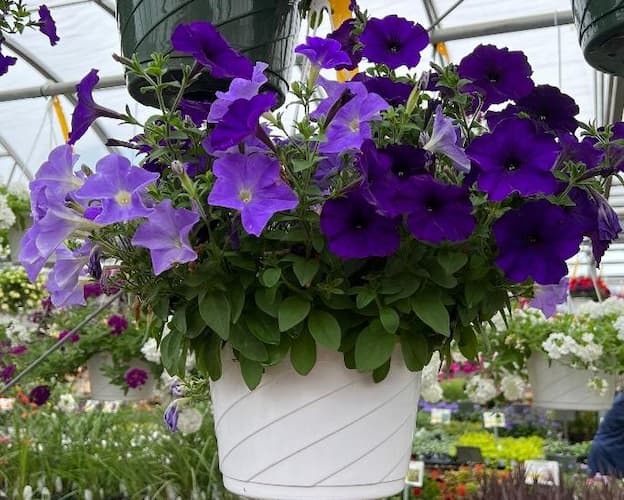
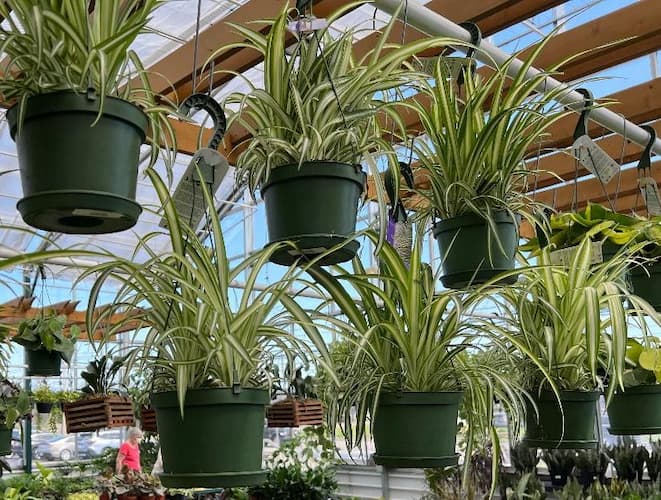
Hanging baskets – We are all very familiar with the wide array of flowers, that gracefully drape down from a hanging basket. Vegetable gardeners- – tomato plants are great candidates for a hanging basket.