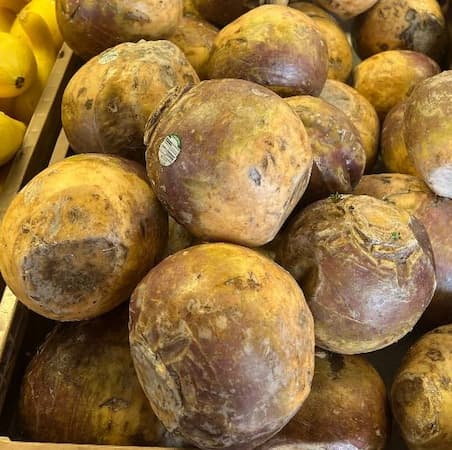
As a member of the mustard family, Rutabaga is not an overly common crop in home gardens in the U.S. They are, however, quite popular in Europe and Canada. Like its cousin the Turnip, Rutabagas are an easy-to-grow root crop. They are nutritious, versatile, and taste good raw, with dips or cooked. Of the two, rutabagas are larger and take longer to reach harvest. Even experienced gardeners can Use this guide on “How to Grow Rutabaga” to learn how to grow them better. Then, buy some seeds and get growing rutabaga.
For some reason, when we speak of Turnips and Rutabagas, we talk about them together. Perhaps, that’s because they both are root crops, and both are more obscure and uncommon in the vegetable garden. There are significant differences. Rutabagas, for example, are a cross between a turnip and a cabbage, hence we consider them cousins. Turnips are quick to grow and can produce two or more crops in a season. Growing Rutabagas require 80-100 days. You will only get a fall crop.
Did you know? In Ireland, Turnips and Rutabagas were hollowed out and a small ember was put in them to ward off demons and devils. They were the first Jack O” Lanterns.
Common Varieties of Rutabaga
Rutabaga ranges from a round root to a slightly oblong variety. The root has a peppery like cabbage flavor.
Here are the most popular varieties:
Altasweet has less of a peppery taste.
American Purple Top is an heirloom. It is the most popular variety.
Champion Purple Top has large, smooth roots. They are pale ivory with purple tops.
Laurentian is an heirloom variety with sweet bulbs.
Navone Yellow Cabbages is excellent for long-term storage. It has yellow flesh.
Pike is perhaps the hardiest variety.
Sowing Rutabaga Seeds
Sow Rutabaga seeds 1/2 inch deep, two to four inches apart, in rows 1 1/2 to two feet apart. Plant Rutabaga seeds in double rows to conserve space in your home garden.
Final Spacing: Depending upon variety, space plants 2 – 6 inches apart, in rows 18 – 24 inches apart.
Time the sowing of seeds for a fall harvest. This can vary significantly, depending upon the length of the season in your area. Try to time the harvest between the last couple weeks before frost to about a month after the first frost. Being hardy plants, they survive frosts. Even after hard freezes, the roots are fine to harvest.
How to Grow Rutabaga Plants
Rutabaga plants grow best in full sun.
While the plants tolerate poor soils, they grow better in richer garden soils and be less likely to take on a woody texture. Work the soil and add compost and manure. Make sure to remove any large rocks and stones that may impede the growth of the root.
Rutabagas sprout in about a week to ten days. A couple of weeks after they have sprouted, thin seedlings.
Provide ample water throughout the growing season. Keep the soil moist, not wet. As with other root crops, the action is below the soil. You want to encourage the steady growth of the roots. As a rule of thumb “when in doubt, water”.
Fertilize at planting time and again every 3 weeks.
Rutabagas can be visited by a variety of insects and pests. The insect world knows that this vegetable is tasty and nutritious. Insect pests include slugs and snails, aphids, beetles, cutworms, and root maggots.
Plant Disease
Occasional mildews and a white blister disease can affect the crop. However, it is infrequent.
Plant Problems – Diagnosis, causes and cures for many common plant problems.
Plant Hardiness
Turnips and Rutabagas are cool weather crops. They withstand light freezes. Rutabagas are the hardier of the two and can be harvested well after the first killing frost.