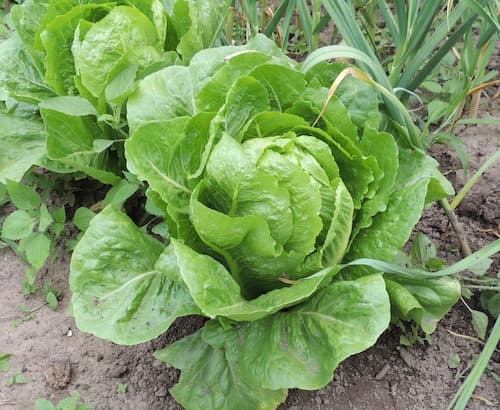
If you like greens, certainly you will grow lettuce in your garden. What is more, you’ll likely grow more than one variety. And we encourage you to grow a variety that you like but have never grown before. Without a doubt, you’ll be glad you did. After reading this guide on “How to Grow Lettuce Plants”, you will be well on your way to growing some great greens for your salads.
Greens are the starting point for every good salad. Of course, it is a basic in sandwiches, and as a decorative underlayment for many other foods. It is nutritious, yet low in calories. That is why it is so popular for dieters, and for those who want to stay trim. Dieting and health issues aside, we eat lettuce because it tastes good!
Did You Know? Generally, lettuce is only used as a fresh vegetable. It is not frozen, canned, dried, or cooked. However, one site visitor contributed a Lettuce Soup recipe. Got a soup or vegetable recipe to share? Email us today!
Varieties of Lettuce
Head or "Heading Lettuce
This group’s leaves form into a ball or head, as it grows and matures. It also includes varieties that head or bunch up, called “loose-head”. Members of this group include:
Mesclun- A combination of leaf lettuces in one seed packet.
Sowing Lettuce Seeds
The seeds are very fine. Plant in rows, spreading the seeds as thinly as possible. Yet, no matter how hard you try, they are so difficult to disperse, that thinning the seedlings is a must. You can purchase properly spaced seed tapes of some of the more popular varieties. While seed tapes cost more, it is a time saver. Cover the seeds with a very fine layer of loose soil or starting mixture.
Also, you can plant indoors in pots. This works well for bunching or heading types of lettuces and will give your seedlings a more controlled environment. Given a lot of direct sunlight, it also results in a strong seedling. Then, when transplanting in the garden, give the plants the proper spacing.
Did You Know? 73% of the lettuce consumed in the United States is Iceberg lettuce.
Succession Planting
Succession planting is a common and useful practice. Lettuce is a perfect candidate for succession planting. Thus, plant small rows or sections of your garden with lettuces every week to ten days. This will provide a continuous harvest. Vary the types you plant to afford variety over the season.
Whether sowing indoors or out, you will likely want to transplant your seedlings with the proper spacing for full development without crowding. Lettuce likes cool weather and lots of moisture. Transplanting should only be done in cool, preferably cloudy weather. If the weather is hot and sunny, we recommend putting off transplanting if possible. If this is not possible, then transplant in the evening. Water thoroughly and every day after, unless it rains, for about a week.
The key to growing crisp, sweet lettuce greens, is to get it growing at a fast pace. That means plenty of water and a healthy dose of fertilizer.
Garden Tip: When transplanting lettuce in hot weather, place some form of sunshade over the plant for a couple of days. Any makeshift shade will do.
Bunnies like lettuce. Got bunnies!? Then, a rabbit fence is in your future.
Insects can become a real problem, too. Lettuce is delicate and can absorb many insecticides. Therefore, if you want or need to use insecticides, look for brands that are less harmful to you and the environment. We like to avoid insecticides on leafy vegetables wherever possible. We suggest organic sprays and a willingness to give up some of the harvest to insects versus using pesticides. After all, one of the reasons most of us have gardens is to avoid the pesticides.
Note: We do not recommend insecticides at all for loose-leaf lettuce varieties.
Slugs are a real problem for all types of lettuces. There are a variety of control methods. More on Slugs and snails.
Plant Disease
Lettuce will wilt and rot in hot, humid weather. The plant will also “bolt” or go to the seed stage in higher heat. Heading or bunching types are more susceptible to rotting and bolting. Leaf types grow and mature quickly and have fewer disease problems.
Days to Maturity: Loose-leaf varieties can be ready to begin cutting in as little as three weeks. Varieties that form loose or tight heads need more time, up to several weeks. Because there are so many varieties, check the information on the seed packet for more specific growing times.
Pick lettuces as soon as it is big enough to use. On loose-headed varieties, the outer leaves can be picked and the inner leaves allowed to grow. Or, use the plants pulled while thinning. Use a sharp knife or scissors. Loose-leaf varieties will grow back after cutting.
Storage Tip: Put a slightly wet paper towel into the sealed plastic bag with lettuce, to keep it from turning brown.
Plant Hardiness
All forms of lettuce thrive in cooler weather, with moderate moisture. Lettuce does not like mid-summer heat, or dry conditions. Many gardeners will plant a crop for spring and early summer harvest, leaving the mid summer months to the tomatoes and the corn. Then, as the late summer heat begins to wane, they plant a new lettuce crop for a fall harvest.
As a tender annual, lettuce will die with the first fall frost. If you’re plants are still healthy and productive, cover them if frost is in the forecast.