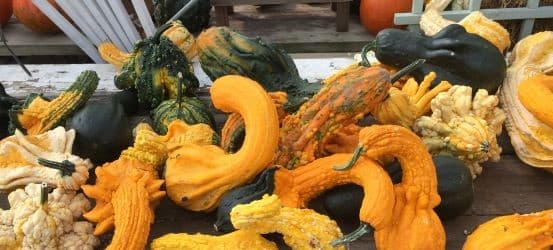
Well, aren’t you lucky!? There are seemingly endless different varieties of gourds. As a result, there’s no limit to your creative craft projects and fall decorating. Gourds are prolific cross pollinators. There are so many varieties that it poses a dilemma for home gardeners. With limited garden space, how does a gardener choose which varieties to grow?
Gourds are a fun vegetable to grow. They are a member of the Cucurbita family, which includes pumpkins and squash. In addition, they are easy to grow. Gourds come in all kinds of shapes, colors and “designs” The fun is in getting a variety of gourds to mix and match in the fall, to create an eye-appealing display, and to make a wide variety craft projects. When doing craft projects with gourds, make sure to get the kids involved in the fun!
Cross pollination over time has created a wealth of varieties of gourds. Cross pollination aids in creating different colors and shapes of gourds. The Cucurbita family is notorious for cross-pollination.
Different Varieties of Gourds
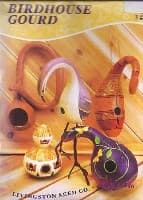
Birdhouse Gourd – Perhaps the most popular gourd variety. First, dry the gourds. Second, decorate them. Finally, hang them up as a birdhouse. Your birds will soon move in and thank you.
Many gardeners are also avid bird watchers. So, this is a great way to enjoy both hobbies.
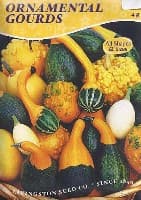
Ornamental Gourds – This is not a single variety. Rather, it is a collection (or mix) of different varieties of gourds. hey are most popular in fall and Thanksgiving decorating projects. And, Ornamental gourds are perfect for craft projects. Grow them on a fence or trellis to keep the gourds off the ground. When you harvest them make sure to leave the stem on them, too. The stem gives it character.
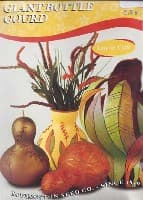
Bottle Gourd – his gourd’s name comes from its bottle shape. Among them, the Giant Bottle Gourd is the largest and most popular. Among them, the Giant Bottle Gourd is the largest and among the most popular gourd.
Obviously, it can be used as a bottle, in addition to decorating and craft projects.
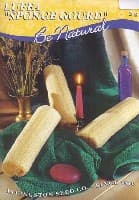
Luffa – This gourd is known as the “sponge gourd”. This useful, cucumber-shaped gourd can be used for bathing, filtering, and cleaning.
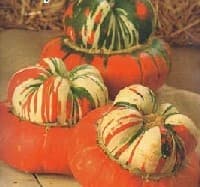
Turban– Are you looking for different varieties of Gourds? This one is different, for sure.
Pumpkin growers call it a pumpkin. Squash growers consider it a squash. But, you’re a gourd grower. So, you may consider it a decorative or an ornamental gourd.
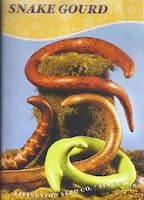
Snake Gourd – This unique gourd twists and turns into snake-like shapes. Gourds reach 18 to 48 inches long in multiple colors and shades.
Is it a Gourd or a Pumpkin?
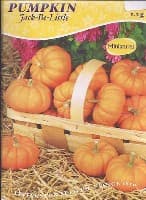
Miniature Jack Be Little Pumpkin – There are many different varieties of gourds. But, this one begs the question: “Is it a pumpkin or a gourd?” Miniature pumpkins are actually gourds.
This miniature pumpkin fits in the palm of your hand. Easy to grow. It is perfect for fall decorating. More on how to grow Jack Be Little pumpkins
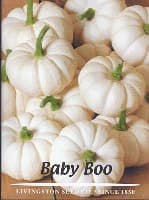
Mini Boo Pumpkins. Like its cousin, Jack Be Little, Baby Boo is a small gourd that fits in your hand. It is often called a miniature pumpkin, because of its shape.
Pumpkin Nook- How to Grow Gourds and pumpkins are members of the same family and are grown similarly. And, this site has lots of growing information, too.
Subscribe To Our Newsletter
We hope you enjoyed this article on varieties of gourds. Thus, please tell your friends about us.