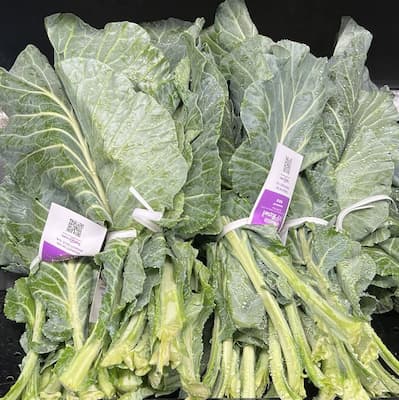
As a member of the cabbage family, these plants are far less known. Collard greens are closely related to Kale. They are strong flavored, open-leafed cabbage. They do not form a large, round head. Use this garden guide on “How to Grow Collard Greens” to produce a great crop in your home garden.
Despite being easier to grow than regular cabbage, why isn’t it popular? The answer is taste. Collard greens have a strong taste and can be quite bitter, especially in warmer weather.
While not overly popular in all of the United States, it is a staple in the South. Accordingly, most Southerners grow collard greens in their home garden.
Varieties of Collard Greens
There are few varieties to choose from. Many garden stores and seed catalogs do not carry them. however, they are available in local garden centers in the south where this green is popular.
Collard Greens Plant Specifications
Days to Harvest: Harvest mature leaves in 75 – 85 days. You can begin to harvest smaller leaves as soon as they reach a size where you can use them.
Similar to other vegetables, Collard greens are very healthy for you and your family. Therefore, add plenty of it to your diet.
One cup of raw, shredded collard greens has approximately:
11 calories
5.2 g carbs
0 cholesterol
0.2 g fat
1.2 fiber
1 g protein
Additionally, the fiber content in Collard greens helps to lower Cholesterol.
Light Requirements
Like most vegetable garden plants, all varieties of Collard Greens grow best in full sun. Grow them in a location where they receive at least six to eight hours of direct sunlight.
However, at the same time, it is a cool-weather crop. So, hot, direct sunlight can cause scald and often results in the plant bolting. Therefore, in hotter climates, provide partial shade from the hot, midday sun.
Planting Collard Seeds
Many areas can grow spring and fall collard crops. All members of the cabbage family withstand frosts and freezes. Therefore, plant seeds or seedlings into your garden as one of your first crops. Consequentially, they will be harvested before the summer heat arrives. Importantly, these plants do not like high heat and dry conditions.
Garden Tip: If you plant early in the year, consider using a raised row or bed. It allows better drainage during early spring rains. About Raised Beds
Indoors: Sow seeds for a spring crop indoors four to six weeks before planting outdoors. Plant your seedlings outdoors very early in the season. Collards can be planted outdoors, before the last frost date for your area.
Plant seeds in containers 1/2 inch deep, in the sterile starting mix. Then, water thoroughly once. Water lightly after the seeds have sprouted. Provide the plants with plenty of sunlight or artificial grow lights so the plants do not become spindly. Also, boost plant health with a light application of liquid fertilizer once or twice during this period.
Outdoors: Seeds can be direct sowed into the row. Or, start them in a separate area and transplant them into the row after a few weeks. We recommend planting them together in a seedbed and transplanting the seedlings. As a result, you control the spacing of your seedlings. This is a common method for the second planting. Plant seeds 1/2 inch deep. Water well and make sure to keep the top level of soil moist, especially during the drier mid-summer planting.
Whether direct seeding or transplanting, make the final spacing 18 to 24 inches apart, in rows three feet apart. The outer leaves of a healthy plant will spread and cover a lot of space.
Garden Tip
For direct seeding, prepare the soil first. Then, place tomato cages (to mark your planting) 18 to 24 inches apart. Sow several seeds inside the ring of the cage. Thin to two plants a week after germination, and one plant after a couple of weeks. This avoids transplant shock, and assures proper spacing, for maximum growth. Finally, remove the tomato cages after the seedlings have begun to grow.
How to Grow Collard Greens - Season Long Care
Growing Collard greens is easy.
Because Collards do not form heads, it is easier to grow than cabbage. The young leaves can be harvested as the plant grows for salads, soups, and other recipes.
Collard plants prefer full sunlight. Collards will grow in average and poorer soils. But like any plant, they respond favorably to richer soil high in nutrients.
Note: Make sure to provide plenty of nitrogen for fast growth and a greener crop.
Keep the soil moist and well-draining, but not wet. Dry conditions lead to bitter vegetables in all of the vegetable world. Collards are no exception.
All members of the cabbage family are extremely susceptible to insects. Collard greens are no exception. Among the most common are aphids, and cabbage loopers. Cabbage loopers the larva stage of a moth. Those white moths that visit your garden and yard are the culprits. Effective treatment in the home garden is to place a screen over the plant so the moth cannot lay her eggs.
Commercial growers apply insecticides to control them. Aphids are controlled by frequent spraying. Organic controls in the form of soap or garlic sprays are also effective.
Plant Disease
The plants are fairly resistant to most diseases.
Harvesting Collard Greens
Days to Maturity: Collard greens are normally harvested in 75 – 85 days.
The tender young leaves can be harvested as soon as they reach a size that is easy for picking.
Plant Hardiness
As previously mentioned, Collard Greens are among the hardiest of annuals. The plants can withstand temperatures into the upper 20’s. You know you have a hardy plant when you go out to the garden in December, brush a little snow away, and harvest some vegetables.
Did you Know? For all members of the cabbage family, the flavor is better in cool weather. Most growers will attest that the flavor is best after a frost.