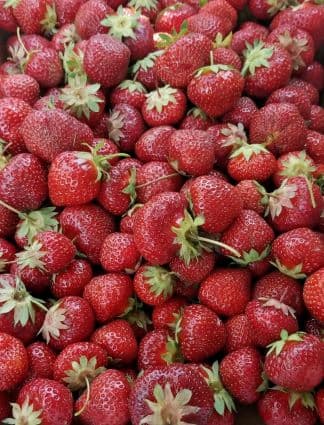
About Growing Strawberry Plants in Your Home Garden
Strawberry plants are easy to grow perennials. They are one of the most common fruits in the home garden for both their ease of growth and popularity at the table…if they get that far. Are you thinking about growing strawberries? All you need are some plants, or shoots, an area in your garden that receives full sun, fertile soil, plenty of water, and your green thumb.
Did You Know? Fresh strawberries were once used as toothpaste.
Plant Hardiness Zones: 3 – 9.
Varieties of Strawberries
There are two basic types (and many varieties) of Strawberries. They are June Bearing Strawberry plants and Ever Bearing plants. As their name implies, June bearing types produce luscious berries in June. And, the Everbearing produces over much of the garden season, usually beginning in June.
There are more than 40 varieties of strawberries. Most varieties are found growing wild. And, they generally produce small.
Did You Know? There is a Strawberry Museum. It’s in Wepion, Belgium.
Strawberry Plant Propagation
Most commonly, strawberries are grown by baby plants coming off runners from the mother plant. The baby strawberry plants root themselves into moist soil. The runner can then be snipped off. Transplant the baby plant into a new or existing strawberry patch.
Strawberry plants can also be propagated from seed. The seeds, grown on the outside of the fruit, can be planted directly into the garden. Most often, they are started indoors. Starting strawberries from seed is fun. Just tell your friends and fellow gardeners that you started your plants from scratch. They will be visible impressed.
Did You Know? A single strawberry has, on average, 200 seeds on it!
Select an area of your garden that receives full sunshine. This is one of the key ingredients for a successful, sweet crop. They will grow in areas that are sunny most of the day but need full sun, to develop to their fullest and sweetest potential.
Once planted, strawberry plants will produce well for three to four years. So, select a location that will not be disturbed.
While strawberry plants like lots of water, they need well-drained soil. Elevate the soil to promote good drainage. Add fertilizer and compost into the soil and elevate the rows a few inches above the garden soil level. This will allow those heavy spring rains to quench your plants’ thirst but drain away any excess water.
Irrigation is important. Provide ample, constant amounts of water, to produce big berries. Your berries will grow bigger and juicier if the plants are given a lot of water to drink. Keep the soil moist. If you have well-drained soil and have used raised rows, water well and regularly. Do not allow the soil to become dry.
Plant new shoots 12-15 inches apart. Space rows three to four feet apart to allow room to walk and harvest between the rows. Allow new shoots to develop and grow from strawberry runners six inches or so from the mother plant. They will quickly fill in the rows. Once established, your patch should produce well for three to four years. In the fourth year, prepare a new area and transplant new shoots of strawberry runners to the new patch.
Mulch is an important ingredient to your strawberry patch, providing several benefits.
First, it helps to keep weeds down. Strawberries will tolerate some crowding, but a weed-free patch will produce the biggest and the most berries.
Second, Mulch will help to retain the soil moisture that your plants need to grow big, big berries.
Third, berries need to be kept off the ground as they rot easily. Some mulches, like straw, will facilitate this.
The most common type of mulch is straw, applied thickly around the plants n in between rows. But many other mulches work too. You can even use black plastic to keep weeds down and temperatures up.
Insects, Pests, and Plant Disease
A variety of insects and diseases will affect strawberries. On the insect front, aphids, slugs, and spider mites are common pests. In terms of diseases, strawberries fall victim to rot, wilt, and fungus.
Insecticides and fungicides can be applied before the fruit set. Look for and use organic insect repellents like insecticidal soaps Minimize disease problems by keeping the patch well weeded and don’t overcrowded. This will promote better air circulation.
Birds and rodents love strawberries. Use pest netting to keep birds away. Rodent control is very important.
After Harvest Care
After the harvest is over, many people simply forget about the Strawberry patch. But, before you do, apply some fertilizer to your plants. And, keep the weeds from choking out your plants.