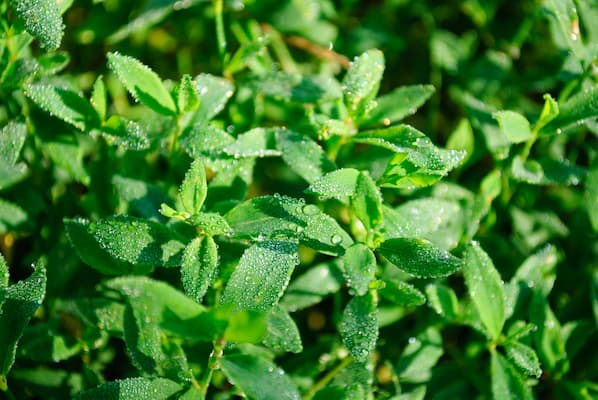
Looking for a natural sugar substitute!? Then, growing the Stevia plant is your answer. Grown for its sweet leaves, Stevia herbs are calorie-free and carb-free. It doesn’t impact blood sugar. The leaves of this herb can be as much as 200 to 400 times sweeter than sucrose(sugar). Native to subtropical regions of Paraguay and Brazil, Stevia is a perennial. However, it is often grown as an annual in cooler regions. It is susceptible to frost and does not like cold weather. So, it is grown as an annual in many areas.
Use Stevia leaves as a sweetener dried or fresh. Grind the leaves as a sugar substitute. The first time you use it, try just a little. It is so sweet that it only takes a little bit.
Stevia is a good container plant. You can grow them indoors as a houseplant, in the fall. Just make sure to bring it indoors before the first frost.
Culinary Uses
Stevia leaves can be used raw or cooked. Try it as a natural sugar substitute in your favorite recipes.
In addition to using the dried, powdered leaves, the green leaves can be put in water. The sweetened water is then used in recipes.
Try stevia as a herbal tea, too.
Nutritional Value
1 teaspoon of dried, ground Stevia leaves contains approximately:
0 calories
1 g carbs
0 cholesterol
0 g fat
0 g fiber
0 g protein
0 mg sodium
Stevia Plant Growing Specifications
Flowers Bloom: Summer
Flower Colors: White
Days to Harvest: Approximately 60 to 90 days after planting Stevia seedlings outdoors.
Ideal Growing Temperature Range: 60 to 90° F. Temperatures below 45° F can kill the plants.
Plant Type: Perennial. The plant normally lives approximately 5 years.
Number of Varieties: Approximately 250.
Deer Resistant? Yes. Deer and other foraging animals are repulsed by the very sweet flavor.
Native To: Brazil and Paraguay in South America.
Botanical Name:Stevia Rebudiana
Stevia Plant Propagation
Stevia plants are started from seed. Start Stevia seeds indoors, about 8 weeks before the last frost in your area. The seeds are hard to germinate. Low seed germination rates are common. It is suggested that darker (more mature) seeds are more likely to sprout.
Seeds sprout best at 65-degree soil temperature, or a little higher. We highly recommend the use of germination mats.
Many growers start plants from cuttings. If you are in a warm-weather area and grow this plant as a perennial, growing them from cuttings is far easier than trying to sprout the seeds.
Seed Planting Depth: 1/4 inch deep or less.
Ideal Seed Germination Temperature: 75 to 85° F.
Final Plant Spacing: Space seedlings, or thin plants 10 to 12 inches apart, in rows 2 feet apart.
Days to Germination: 7 – 21 days.
How to Grow Stevia Herb Plants
Planting and Soil Needs
Stevia are warm weather, sun-loving plants. Thus, wait until nighttime temperatures are above 55 to 60° F and the soil has sufficiently warmed up before sowing seeds or transplanting seedlings outside. While the plant is a perennial, its warm weather needs cause gardeners to grow it as an annual in many parts of the country.
The plant grows best in full sunlight all day long. However, they tolerate a little shade from the hot afternoon sun.
Stevia herbs do not like wet soils. The plants grow best in light, sandy, or well-drained loamy soils. Grow them in a slightly elevated area of your garden.
Light Requirement
Stevia plants are sun-lovers. Consequently, select a location in your garden where they will receive at least six to eight hours of bright, direct sun. For optimal growth and the sweet flavor in the leaves, grow them in a location that receives full sunlight from sunrise to sunset.
The plants tolerate partial shade in the afternoon. It protects them from leaf scald caused by the hot, direct rays of the sun. However, it is important to note that full sunlight is required to maximize sweetness.
Fertilizer Needs
The plants are not big feeders. Too much fertilizer can actually be harmful. Importantly, do not use a lot of nitrogen fertilizer. Rather, a balanced, general-purpose fertilizer works best. First, apply it early in the spring. Give the plants a second application in mid-summer. Finally, if you are growing it as a perennial, give them a light application in late summer or early Fall. If you are growing them as an annual, then a third application is not needed.
Water Needs
While the plants do not like wet soils, they also do not like dry soils either. So, check the moisture level in the soil before adding water. Keep the soil evenly moist, not wet during the entire growing season. Mulching plants helps to retain good moisture levels.
It is important to note that wet or soggy soil will cause root rot.
Other Steps
Your plants will do well if you add compost or mulch on top of the soil. This will feed your plants slowly. As a matter of fact, in average or rich soils, this may provide all of the nutrients that your plants need all season long.
Keep the plants well-weeded, especially when they are young. Otherwise, the weeds rob valuable water and soil nutrients.
Pinch back plant growing tips, to create bushy growth.
Over winter Stevia plants in cold, or freezing weather. They are not tolerant below 45 ° F. But, they are good houseplants.
Insect and Plant Disease Problems
Insect and disease problems are uncommon. However, they do sometimes occur.
Aphids, caterpillars, leaf miners, snails, slugs, spider mites, and whiteflies are an occasional problem. Use a garden-safe snail and slug pellets. Hand-pick caterpillars off the plants when you spot them. For other insects, treat the plant with an organic insecticidal soap if problems arise.
Foraging animals do not bother these herbs.
Stevia herbs can suffer from powdery mildew and leaf spot. Prune plants to improve air circulation. Use organic fungicides for molds and mildews, only if needed.
Avoid root rot by using loose, well-draining soil. Increase drainage, as needed. Before planting, elevate the soil.
You can harvest Stevia leaves as soon as there is enough to use. Pick leaves in the morning after the dew has dried off the plants. Early morning is when sweetness is at its maximum.
Pick leaves before the plant begins to flower, as the leaves then turn bitter. Pinching off flower blooms, as soon as they begin to appear prolongs the harvest.
Harvest the entire plant in the fall before the first frost. First, cut the plant back to a few inches above the ground. Next, hang plants upside down to dry, in a well-ventilated area. After they are dry, remove the leaves. You can also use the tender, young growing tips.
Use a coffee grinder to powder the dried leaves. Store powdered leaves in an air-tight container.
Finally, store them in an air-tight container out of direct sunlight.