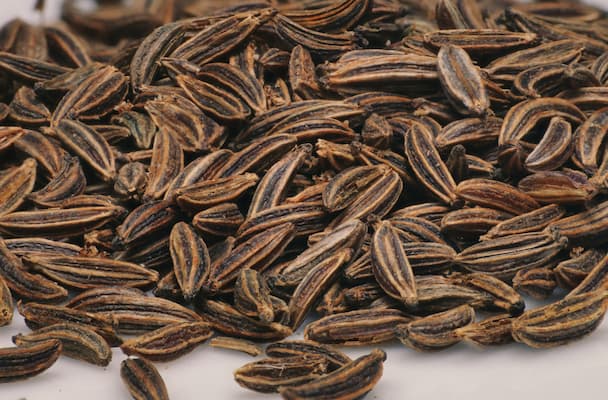
Here is your chance to grow your own caraway seeds for baking! You need to be patient. Caraway plants are a biennial and do not produce flowers until the second season. Once it does bloom, the flowers are loaded with Caraway seeds for drying. Also, you can use the leaves as soon as the plant gets big enough to produce enough to meet your cooking or garnish needs. Caraway herb is native to Europe, Asia, and the U.S. They have feathery leaves similar to carrots.
Did You Know? Caraway roots are edible, too.
Culinary Uses
Spicy caraway seeds are used in bread most notably rye bread, pastries, cheeses, sour cream, cottage cheese, and soups.
Leaves are used as a garnish and a few recipes.
Nutritional Value
One Tablespoon of Caraway seeds contain approximately:
22 Calories
3.3 g carbs
0 cholesterol
0.9 g fat
2.6 g fiber
1.3 g protein
Note: Different varieties may have somewhat different nutritional value.
Caraway Plant Growing Specifications
Days to Harvest: Begin to pick leaves for your favorite recipes after the plant has reached several inches tall. Harvest the leaves lightly at first. Harvest caraway seeds in the second year. Then, at the end of the second year, pull up the plant and harvest the edible roots.
Deer Resistant? Yes. Deer, rabbits, and other pests do not like the strong scent, taste, and texture.
Native To: Asia, Europe, and North America.
Botanical Name:Carum Carvi
Caraway Plant Propagation
Caraway is grown from seed. Directly sow Caraway seeds into your garden and cover lightly with soil. Space seedlings or thin plants to 18 to 24 inches apart in rows 12 inches apart.
For indoor starts, sow seeds 6 to 8 weeks before transplanting them outdoors. Also, we recommend a heated germination mat, for faster, more successful germination.
Caraway plants are also commonly grown by division of the roots. Left unattended, this aggressive plant will do just fine, rapidly spreading its roots into other areas of the garden or lawn. Also, Lemon Balm can be propagated by cuttings.
Final Plant Spacing: Space seedlings, or thin plants to 18″ apart in rows 12 inches apart.
Days to Germination: 7 – 14 days.
How to Grow Caraway Plants
Planting and Soil Needs
Caraway plants are easy to grow. The plants prefer full sun and well-drained soil. They do well in sandy soil and tolerate dry soil conditions. Grow these biennial plants in an area of your Herb garden where they will grow undisturbed and not be in the way when it is time to plant your annual herbs next spring.
For optimal growth, mix compost into the soil at planting time. Additionally, if the soil is average or poor, then mix in a general-purpose fertilizer prior to planting.
Light Requirement
Select a location in your garden where your Caraway plants will receive at least seven to eight hours of bright, direct sun. For optimal growth, grow them in a location where they will receive full sunlight from sunrise to sunset.
They are tolerant of light, partial shade. In hotter regions, select a growing location that has partial sunlight or light shade during the midafternoon to protect it from damage by the hot rays of the sun.
With reduced sunlight, the plants grow slower and smaller, with less flowers.
Garden Tip: Plant a few Caraway herbs each year. As a result, you can harvest some leaves, seeds, and roots every year.
Fertilizer Needs
Caraway plants are not heavy feeders. Add a balanced general-purpose fertilizer once or twice during the growing season.
Water Needs
Provide the plants with plenty of water during the growing season. Keep the soil moist but not wet and allow the soil to dry out between watering. Then, as the flowers develop, allow the soil to dry out. This encourages faster seed formation.
Other Steps
Weeds rob valuable water and soil nutrients. Therefore, keep young Caraway plants well-weeded. Then, after they have grown several inches, apply a layer of mulch. This helps to retain soil moisture and gives the plant a neat and tidy appearance.
First year plants generally overwinter with few, if any problems. In colder regions, apply a thick layer of mulch around the plants to protect the roots from freezing.
Insect and Plant Diseases
As a member of the carrot family, Caraway plants are occasionally afflicted by the same insect pest and plant diseases as carrots.
Aphids can be a problem. Treat affected plants with organic insect repellent, like a garlic or soap spray.
Caterpillars can also be a problem. The best way to control them is by hand-picking them off the plants.
Do not use chemical insecticides on this or any herb plant.
Plant diseases are uncommon.
Harvesting Caraway Seeds
Harvest leaves in the first year. after there are enough leaves to pick without harming the development of the plant.
Flowers and then seeds will form during the second year of growth. Harvest flower heads after seeds have formed, and the flower head has died. Cut back stems and tie them together. Hang them upside down to dry with a bag or pan under them to catch falling seeds. Shake the bundle to extract the remaining seeds.
Finally, harvest Caraway roots at the end of the second year of growth.