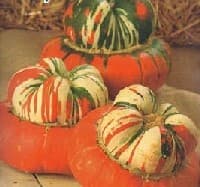
If you’re looking for a strange plant, Turk’s Turban squash is it. Also called “Turk’s Turban Gourd”, the fruit of this winter squash looks like it came from somewhere in outer space. Secondly, it goes by several names. As a member of the Cucurbita family, Turk’s Turban is related to pumpkins, squash, and gourds. So, it’s no wonder pumpkin growers call it a pumpkin, gourd lovers consider it an ornamental gourd, and squash growers commonly refer to it as winter squash. Therefore, we will leave it to you to decide where this festive vegetable (actually, it is a fruit) should beThen, use this guide on “How to Grow Turk’s Turban Squash” in your home vegetable garden. categorized.
Turk’s Turban is perfect for decorating in fall displays. They look great among pumpkins and gourds. Certainly, its alien appearance makes for a great conversation piece.
Turk’s Turban fruit colors vary and are brightly colored. The bottom half is usually a solid color in shades of dark orange to reddish-orange. The top is generally beige with streaks of reddish-orange and dark green. Fruits grow to about 12 inches in diameter and average about 5 pounds.
You can use Turk’s Turban in any of your favorite squash recipes. It is good roasted, baked, steamed, in soups, or on the grill. Find Squash recipes
Origin: Turk’s Turban is an Heirloom. It has been around since at least the 1820s. While it may look like it comes from outer space, tasty Turk’s Turban actually originated on good old planet Earth. It is native to Central and North America.
Don’t Get Confused: Turk’s Turban is also the name of Clerodendrum Indicum, a flowering plant. Yet, they are not related.
Nutritional Value
1 cup of cubed Turk’s Turban squash contains approximately:
76 calories
18 g carbs
0 cholesterol
0.7 g fat
5.7 g fiber
1.8 g protein
Turk's Turban Plant Specifications
Days to Harvest: 70 to 100 days, depending upon variety and growing conditions.
Other Names: Mexican Hat, French Turban, and Turk’s Cap.
Planting Turk's Turban Seeds
Sow Turk’s Turban seeds in the spring after the soil has warmed up and all danger of frost has passed.
Planting Depth: One inch deep.
Plant seeds in rows or hills, planting seeds one-half inch deep.
Space plant at least 6 feet apart in all directions.
Ideal soil temperature for sowing seeds: 55 degrees.
Days to Germination: 10 to 14 days.
Garden Tip: Nick Turk’s Turban seeds, then soak them in water for up to 24 hours, before planting.
In areas with a short growing season, start seeds indoors 4 to 6 weeks before the last frost. Use big pots and do not let the plants get root-bound.
How to Grow Turk's Turban Winter Squash Plants
Planting and Soil Needs
Growing Turk’s Turban gourd plants is easy. The plants like warm to slightly hot weather.
Grow the plants in full sun. They prefer light sand and rich soils. However, with a regular regimen of fertilizer, they do just fine in most garden soils.
Mix plenty of compost into the planting site. Also, mix in some general-purpose fertilizer at planting time.
Light Requirement
Grow Turk’s Turban squash plants in an area of your garden where they will receive at least six to eight or more hours of bright, direct sunlight. For optimal growth and the maximum production of gourds, provide them with full sunlight from sunrise to sunset.
Fertilizer Needs
Like other Cucurbits, Turk’s Turban plants are heavy feeders. Plant them in rich, loose garden soil. The soil should be well-drained. Provide ample fertilizer regularly. A side dressing of fertilizer at planting time will get them off to a quick start. Provide the plants with regular feedings of general-purpose fertilizer early in the season. Then, switch to a high potassium fertilizer just before the plants begin to bloom. It will significantly help the health of the plant and the size of the harvest.
Water Needs
The plants need a regular supply of water, especially during dry periods and the fruit growth stage. Water deeply. Like other garden vegetables, keep the soil moist, not wet. Irregular watering can result in pre-mature ripening of the fruit.
Other Steps
Weed the planting site on a regular basis, especially during the early growth stage. Otherwise, weeds will compete with the Turk’s Turban squash plants for soil moisture and nutrients.
Adding a layer of mulch or compost, will keep the weeds down, and feed the plant.
Train the vines to go in the direction you want them to go. Carefully, and slowly, turn vines as needed. Move them a little each day. Grow them on a fence or trellis. This helps to keep the gourds clean and avoids blemishes.
Trim the vines, removing tertiary vines to promote larger fruit growth.
Garden Tip: Bury vines with an inch or two of garden soil, to encourage secondary root growth.
A wide variety of insects can infest the plants during the growing season. Among the common pests are slugs, snails, squash bugs, squash vine borers, and cucumber beetles. Therefore, ot is important to have an insect control plan in place before insects invade your garden.
A variety of other pests can also cause problems, depending upon where you live. Apply insecticides as needed, following the directions on the label.
Deer and rabbits can also be a problem. We recommend fencing to keep them out.
Plant Diseases Affecting Turk's Turban Plants
As a member of the Cucurbita family, most squash are susceptible variety of bacteria and fungus diseases. Among the most common, are powdery mildew and bacterial wilt.
Plant disease problems are most common in hot and humid weather. A strong, healthy plant, and fungicide treatment will help avoid these problems. Don’t wait for plant disease to get a foothold on your plants. Treat with fungicides at the first sign of problems.
Plant Problems – Diagnosis, causes and cures for many common plant problems.
Harvest Time
Days to Maturity: 70 – 100 days.
Allow the fruit to ripen, and the shell to harden, prior to harvesting. However, harvest them before the first Fall frost in your area.
Plant Hardiness
Turk’s Turban plants are not hardy. The plants are susceptible to frost in the spring and fall.
If frost or near frost temperatures are expected, then it is essential that you cover up the plants.
Squash Recipes
You can substitute Turk’s Turban squash in any squash recipe.