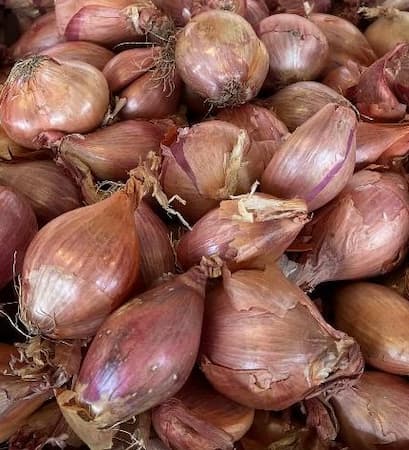
A member of the onion family, Shallot bulbs are considered the best for gourmet cooking. Unlike other onions, Shallots have cloves….like garlic. They have a mild onion and garlic flavor. And, they are easy to grow. Use this plant guide on “How to Grow Shallots” and you’re on your way to growing a great gourmet treat.
While there are a few varieties, the French Shallot, also called “Grey Shallot”, is the most popular, They are considered the “True” shallot by gourmet chefs.
Toxicity: It is important to note that shallots are toxic to dogs, cats, and other pets.
How to Grow Shallots
Light Requirements
Select a growing locations where Shallot plants will receive at least six to eight hours of bright, direct sunlight. For optimum growth, plant them where they receive sun from sunrise to sunset.
The plants tolerate a little shade. Yet both the plants and bulbs will grow smaller.
Planting and Soil Needs
Growing Shallots is easy. And they take up very little space. Plant and grow them like garlic or onions.
The plants grow best in rich, loamy garden soil. However, they tolerate average soils, too. For the best results, mix in plenty of rich compost at the panting site. In poor soils, also mix in a general-purpose fertilizer when panting them.
The best time to plant shallot bulbs in the fall. They can also be planted in the Spring. Plant cloves 6″-8″ apart, sowing them just below the surface, with the pointed end up.
Fertilizer Needs
To keep Shallot plants growing strong and healthy, apply a general-purpose fertilizer one a month. If the soil is poor, apply fertilizer every three weeks.
Water Needs
Keep the soil moist to slightly dry, but not wet, during the entire growing season.
The plant shows few signs of needing water. During extended dry periods, the tip of the plant will turn brown. It is the only tell-tale sign that the pant needs water.
Other Steps
Weeds compete for much needed nutrients and water. So, keep the area well-weeded. For the best results, remove competing weeds regularly.
Also, add a layer of mulch. It helps to retain soil moisture. And it will keep weeds down.
If seed pods begin to develop, remove them. This encourages the plant to continue to send energy and grow the bulb. If you want to harvest seeds for next season, leave a few seed pods on a couple of plants.
Shallots are resistant to most insect problems. Occasionally, root maggots can attack the bulbs. Tiny thrips are an occasional problem, too. Insecticidal soap sprays or Sevin are very effective.
The plants usually experience few disease problems. Wet, and humid weather can increase the likelihood of disease. Bulbs can rot in wet soils.
Plant Problems – Diagnosis, causes, and cures for many common plant problems.
Harvesting Shallot Bulbs
Dig up the shallot bulbs after the plant leaves have yellowed or fallen over. Brush and rub dirt off the bulbs. Then, allow the bulbs to dry in the open air for a several days. Cut the top and the roots of the plant. Allow the cuts to air dry for two or three more days.
Store bulbs in a cool, dry place out of direct sunlight.
Plant Hardiness
Like onion plants, shallots are as hardy as they come. Frosts, freezing temperatures, and even snow will not kill them. It will only slow their growth, until warmer weather returns. Extended cold below 20-25 degrees, however, can kill them, if they are growing when exposed.