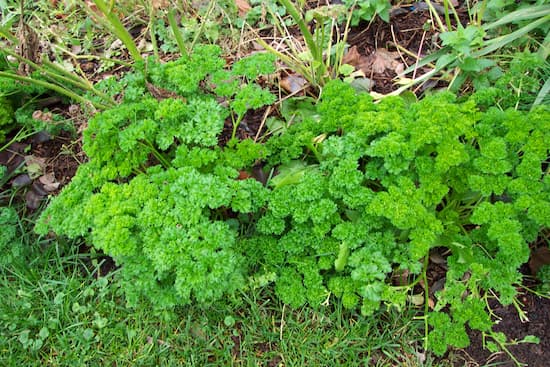
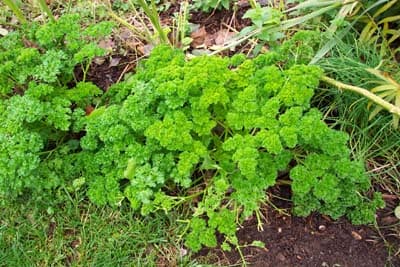
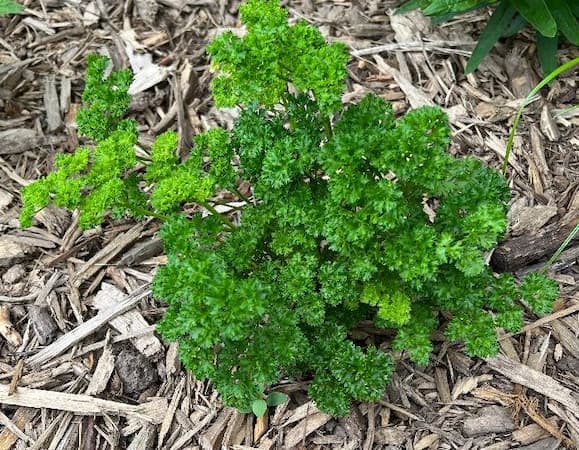
One of the most popular plants in the herb garden is parsley. It is a biennial, which means it grows for two years. This means you only have to plant it every other year. Additionally, it is a hardy plant. So, you can harvest sprigs well after the first frost in your area. Growing parsley herb means you never have to buy it in the store again. So, use this guide on “How to Grow Parsley” to grow a great crop in your herb garden. Then, grab some parsley seeds and start this year’s crop.
Did you know that Parsley is an easy-to-grow vegetable? That’s right, a vegetable! Almost everyone thinks of it as an herb. Actually, it is both a vegetable and an herb. We suggest you grow it in a flower garden near the house, or a container, especially if your garden space is limited. By planting it near your house, you can quickly harvest some for cooking, and it will continue to grow well into the fall months.
As an herb, it has a mild flavor which is used in a wide variety of recipes. It also is an important garnish, decorating many types of trays and dishes. Kids seem to like to take Parsley garnish, and munch on it.
Did you Know? There is also a vegetable called Hamburg Parsley, which is grown for its long root to flavor soups and stews. It is an excellent source of vitamins A, C, calcium, and iron.
Try growing this herb in a sunny window and enjoy it fresh all winter. We do!
Thought for the Day: If a parsley grower is sued, can you garnish his wages?
Botanical Name: Petroselinum Crispum, a Biennial

Parsley promotes kidney health and helps to control blood pressure.
Parsley Trivia: Ancient Romans used sprigs of parsley as garlands on their crowns.
Like other herbs, parsley is good for your health.
1 cup of chopped parsley contains approximately:
Days to Harvest: 70 – 90 days. However, you can usually begin to take a few sprigs much earlier. Just don’t take too many while the plant is still young.
Plant height: 8 to 24 inches tall, depending upon variety.
Light Needs: Full sunlight to partial shade.
Ideal Soil pH – 5.0 – 7.0
Plant Hardiness Zones: 3 – 9
Deer Resistant? Generally, yes. However, they will eat it if other food is scarce.
Plant Type: Biennial.
Native To: Mediterranean region.
Botanical Name: Petroselinum crispum
This herb is grown from seed. Plants can be started indoors or out. We suggest you sow these tiny parsley seeds indoors and let them grow for a few weeks before planting them outdoors. They transplant easily. And, transplanting affords easy spacing.
For indoor starts: Plant seeds in peat pots or pellets. This will minimize transplant shock.
After seeds have sprouted and are over 1/2 inch tall, thin to one plant per pot.
Garden Tip: Use scissors to thin plants, cutting the small plants at the base.
Sow parsley seeds thinly. Parsley seeds are so fine, you can sow on top of the soil and just water them in. Sow parsley seeds in your garden as early as the ground can be worked. Then, cover the seeds with 1/2″ to 3/4″ of fine garden or seed starting soil. Then, water lightly, if the soil is dry.
Seed Germination: Parsley seeds sprout very slowly. They take3-4 weeks to germinate.
Because of the long germination time, we recommend an indoor start. Plant parsley seeds in peat pots or pellets, to minimize transplant shock.
Also, we strongly recommend using a heated germination mat.
Parsley herbs grow best with at least six to eight hours of bright, direct sunlight. In cooler regions, plant them in an area where they receive sunlight from sunrise to sundown.
However, in most areas the plants benefit from light, partial shade during the hot, mid-afternoon hours. In hotter areas of the country, grow them in light, filtered sunlight. The hot rays of the sun can scald the leaves.
While Parsley is a biennial, it is often grown as an annual, especially in colder climates.
The plants grow in full sun to partly shaded areas. The soil should be rich. This easy-to-grow herb tolerates poor soil and poor drainage. So, you can be grow it in areas of the garden that other plants do not like.
Parsley plants tolerate a little crowding.
Apply a high nitrogen fertilizer when the plants are transplanted into the garden. Then, re-apply once a month during the entire growing season.
Parsley plants thrive in moist, but not wet soil. They tolerate a little dry soil, but not for extended periods of time. Therefore, give them water during periods of dry weather and drought.
Keep young plants weeded, especially when the plants are young.
Garden Tip: For a maintenance-free crop, mulch around the plants.
Aphids will infrequently enjoy a meal of your parsley. Aphids have far too many other flowers and vegetables, that they prefer much more.
We recommend tolerating the occasional infestation, rather than using insecticides. Or, try organic sprays.
These hardy plants rarely suffer palnt disease. Yet, the leaves can get scalded by the hot rays of the midsummer sun.
Easy-to-grow parsley herbs are a great candidate to grow in containers on your patio or deck. Additionally, you can grow them in a window box planter outside your kitchen window. Then, when you need a few sprigs, simply open the window and take a few sprigs out of the window box.
In addition to the how to grow steps above, here are a few additional steps for growing them in containers:
Pick leaves and tender young stems for eating fresh. Cook the sprigs like spinach.
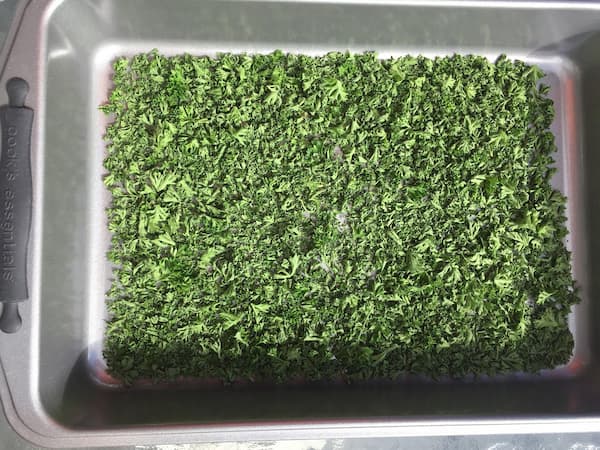
Parsley is one of the easiest herbs to freeze. See How to Dry Herbs.
Are Parsley Roots Edible? They certainly are. Roots take a long time to grow. Roots can be picked when the roots are at least several inches long. Peel and eat raw or cooked. Use in soups, salads, and stir-fries.
Parsley is very hardy. Plants that have wintered over in your garden, will begin their growth with the first rays of sun in the spring. New growth begins shortly after the snow has melted. You can harvest the leaves late into the fall.
You do not need to take any steps to protect them during the winter months.
©1999-2026 GardenersNet.Com, All Rights Reserved