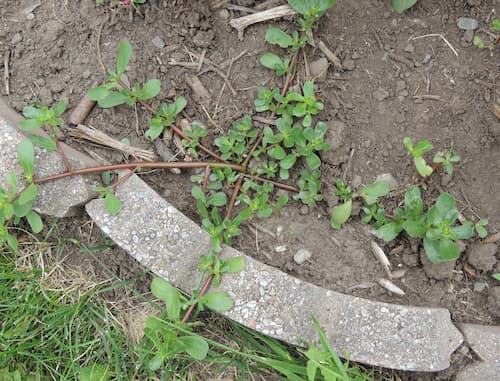
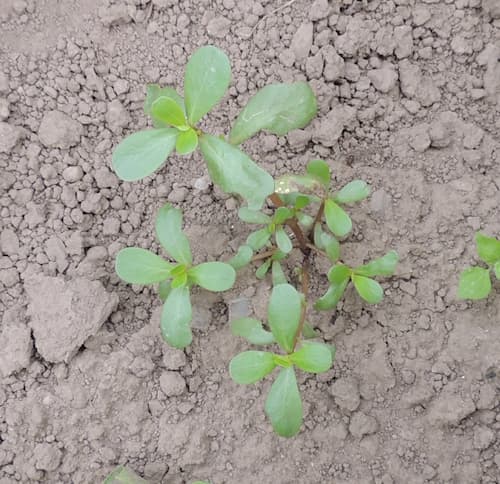
Millions of home gardeners have Purslane in their garden, and they only know it as an all too common, persistent weed. This succulent plant is drought tolerant and grows just about anywhere, in almost any soil and weather conditions. And, purslane plants come back year after year, making it difficult to rid your garden of this weed. This garden guide on “How to Grow Purslane” will help you to have a great crop in your vegetable garden.
To the informed gardener, this is the Purslane plant, an edible, highly nutritious vegetable plant. In fact, once you recognize it as a vegetable, you may still opt to treat it as a weed. After all, it is not easy to begin eating a plant, that you have always considered a weed.
Native to India and Persia, the roughly 500 varieties of Purslane plants have made their way to home gardens around the world. Purslane is a drought-tolerant succulent, with thick stems and leaves. It produces yellow flowers. If you do add this vegetable to your diet, it is good for you, raw or cooked. It is low in calories, nutritious, and loaded with vitamins and antioxidants. Additionally, it has more beta-carotene than spinach.
The leaves, tender stem tips, and seeds are edible.
Let’s explore how to grow purslane, how to use it in your diet, and the medicinal benefits…… read on!
Nutritional Value
One cup of raw purslane contains approximately:
9 calories
2 g carbs
0 cholesterol
0.2 g fat
0.6 g fiber
0.9 g protein
19 mg sodium
Purslane Plant Specifications
Days to Harvest: Three to four weeks before there are enough leaves to harvest.
Other Names: Duckweed, Fatweed, Pigweed Portulaca, Pursley, Wild Portulaca
Plant Propagation
Purslane plants are propagated from both seeds and pieces of the stem. A single plant can produce over 50,000 seeds! The seeds are capable of being dormant in the soil for 30 to 40 years. Furthermore, pieces of the stem that break up as you weed your garden, will produce more Purslane. So, if you consider it a weed, make sure to remove all of the plant while weeding it out of your garden
Seeds germinate at a high soil temperature of 90 degrees.
The plant begins to produce flowers and seeds in as little as three weeks.
The common varieties of Purslane that you see as a weed growing in your garden produce stems that sprawl along the ground. You can purchase seed varieties that grow more upright, making harvesting easier.
Seed Germination: 7 to 10 days.
Final Spacing: Six to eight inches.
How to Grow Purslane Plant as a Vegetable
Purslane plants are all too easy to grow. You can find them growing wild in your flower and vegetable gardens, as well as in cracks in your sidewalk or driveway. So, growing them in your garden as a vegetable should be a cinch.
Purslane grows in just about any soil, from rich, fertile soil, to dry, rocky soils. It is drought tolerant.
Garden Tip: If you are looking to control them as a weed, apply a thick layer of mulch around your plants
As an aggressive plant, it will quickly take over the garden space you allot of it.
Weed as needed.
Water purslane plants occasionally in hot dry, drought conditions.
You can begin to harvest the leaves and tender stem tips, as soon as the plants become big enough to pick leaves.
Adding Purslane to Your Diet
Purslane plants can be eaten raw or cooked. It has a flavor similar to spinach or watercress. To some chefs, it is a culinary delicacy.
Use it raw in salads and sandwiches. Add it to omelets, soups, stews, tortillas, or stir-fried. Try substituting Purslane in place of spinach, in your favorite recipes.
Medicinal Benefits of Purslane Plant
Purslane has been used medicinally for thousands of years.
It has been used as a remedy for Arthritis, and the treatment of respiratory and circulatory problems. It is believed to lower blood pressure and cholesterol levels, and to help avoid blood clots.
Related Articles
People who read this article on purslane plants also liked: