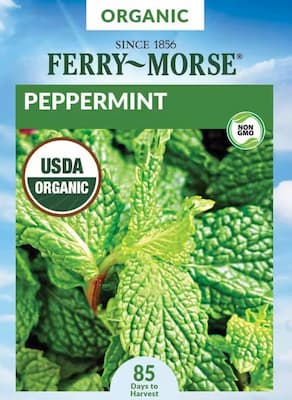
Members of the Mint herb family are in good company. There are about 3,500 varieties of mint plants! Two of those varieties are very, very common. It should come as no surprise, to learn that the most common mints are Peppermint and Spearmint. Now, here’s some even better news….. growing mint herbs is very easy!
Most mints are natives of the Mediterranean region both annual and hardy perennial varieties. They are very easy to grow. They have bright green leaves on bushy plants. Once planted, they come back a year, after year, after year. They require little or no maintenance, too. However, they are invasive plants, and take over a garden, if allowed. To keep them from spreading surround mint herb plants with border edging. Most varieties grow 12-24 inches.
Mints are great in herb gardens, in beds along with the house, or in containers on your patio or deck. They can be grown indoors as houseplants.
Did you know? The mint family includes Marjoram, Oregano, Rosemary, and Sage. And, approximately 3,496 more.
Medicinal and Culinary Uses
Medicinal Uses:
It soothes upset stomachs and on occasion, for toothaches. It has also been used for headaches.
And, it promotes healthy digestion, reduces gas, and helps to ease and eliminate nausea.
They are a standard ingredient in many breath mints.
Culinary Uses:
Use oil of mint in cookies, teas, candies, jellies, chewing gum, flavoring for medicines, toothpaste, ice cream, liqueurs, and much more.
Try tossing a few leaves in your tea or hot chocolate tonight.
Nutritional Value
100 grams of Mint contains approximately:
70 calories
14.8 g carbs
0 cholesterol
0. g fat
8 g fiber
3.8 g protein
13 mg sodium
Mint Herb Growing Specifications
Flowers Bloom: Summer
Flower Colors: Flower colors include blue, pink, and white.
Days to Harvest: The leaves are most flavorful, and the oils are the strongest just before the flowers bloom.
Plant Height: One to three feet tall. There are a few taller varieties.
Ideal Growing Temperature Range: Daytime: 60 to 70° F.
Plant Type: Annuals and perennials.
Number of Varieties: over 3,500.
Deer Resistant? Yes. Dere and other foraging animals do not like the plant’s strong scent.
Native To: Asia, Africa, and North America.
Botanical Name:Mentha
Mint Plant Propagation
Mint plants are started from seed. Get an early start planting them indoors as a houseplant. Or, directly sow seeds into your garden in the spring. Space seedlings or thin plants to 12″ to 18″ apart.
Established plants are prolific propagators, producing rhizome suckers in the second and following years. They can also be grown from cuttings.
How to Grow Mint Plants
Planting and Soil Needs
Mint plants are simple and easy to grow. If unchecked, these invasive plants rapidly spread their roots and overcrowd other plants.
The plants thrive in full sun to partial shade. They will do well in average soils. With a little fertilizer, you can grow them in poor soil, too.
For a good start, mix compost into the planting site.
Light Requirement
Mint plants perform well with just four to six hours or more of bright, direct sunlight per day. The plants also grow well with partial shade to protect the plants from the scalding rays of the sun during the hot afternoon hours.
Fertilizer Needs
Mint plants are not heavy feeders. They do not require a lot of fertilizer. Rather, in average to rich soils, do not add fertilizer to this plant.
In poor soil add a balanced, general-purpose fertilizer at planting time. Then, again once or twice during the growing season.
Water Needs
The plant withstands droughts and heat very well. Chances are, the plants will only need extra water during extended periods of drought.
Allow the soil to dry out between watering. Then, water deeply, especially late in the season when the roots have grown deep.
Other Steps
Weeds rob valuable water and soil nutrients. Therefore, keep young Mint plants well-weeded. Then, after they have grown several inches, apply a layer of mulch. This helps to retain soil moisture and gives the plant a neat and tidy appearance.
Prune away dead, damaged, or diseased leaves or stems. If you are growing a perennial variety, at the end of the season cut the plants back by 1/3 to 1/2.
The plants are aggressive growers, quickly spreading their rhizomes far and wide. It will crowd out other plants if given the chance. Give them plenty of space away from other plants in your garden. Or, better still, put in a border edging, dug 3-4 inches deep.
One of the great things about growing mint is that deer and other foraging animals avoid it. They do not like the strong scent.
Perennial varieties are hardy and do not need much winter protection, if any. In colder regions, apply a layer of mulch to protect the rhizomes from freezing.
Insect and Plant Disease Problems
Insect and disease problems are uncommon. Mint has natural repellents for insects and is sometimes used in organic sprays.
Ants do not like Mints – As a result, they are good companion plants. Grow them around your other crops. Or, use mint oil in a spray.
The best time to harvest them is just before the flowers appear because at this time the flavor is best and the oils are at their strongest. The oils in mint plants are in the glands of the leaves. Crushing them releases the oils and the pleasant, strong, and soothing flavor. After the plant has a dozen or so leaves, you can begin to harvest them. Take just a few leaves while the plant is small. Never take more than 1/3 of the foliage, or you will retard the development of the plant. Once it is well-established you will always have more than enough leaves to harvest.
Harvest mint leaves at any time. They can be used fresh, dried, or frozen. Like other herbs, pick them in the morning, when the oils are strongest. Spread leaves out to dry in a cool and ventilated area.
Tip: Mint has a very strong, overpowering scent. Once it is dry, store it in an air-tight container. Keep it away from other herbs.
Related Articles
Additionally, people who liked this article on “How to Grow Mint Herbs” will also like: