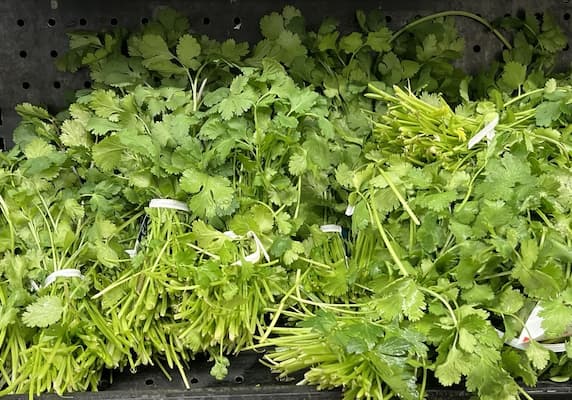
Is it Cilantro or Coriander? The plant is called Cilantro, while the seeds are called Coriander. It is also called Chinese Parsley……yes, it belongs to the Parsley family. Call it what you’d like. But, plan on growing cilantro herbs this year, as Cilantro plants and coriander seeds have many culinary uses.
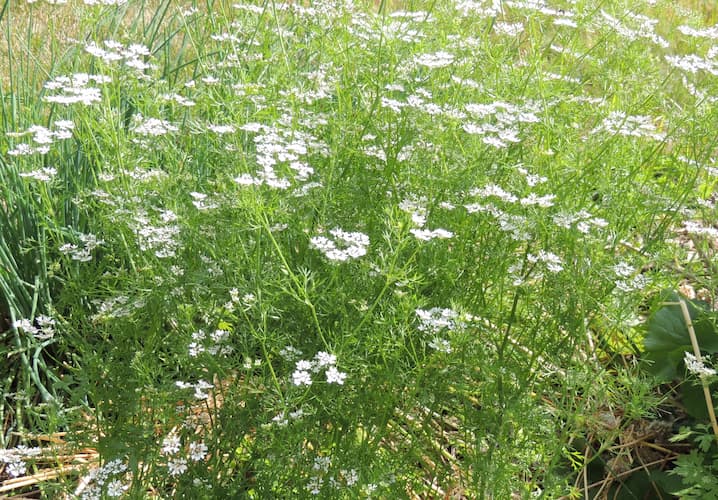
Cilantro is a staple in Mexican cuisine. The plant has parsley-like leaves, producing a profusion of small, white flowers in the second year. The sweet-tasting seed has a pleasant odor when ripe. Some varieties of Cilantro grow up to three feet tall.
Cilantro Tip: Save your cilantro stems. They are loaded with flavor. Chop them up and add them to tacos, fajitas, salsa, and other Tex-Mex dishes.
Culinary Uses
You will find this useful herb in many ethnic recipes, including Mexican, Tex-Mex, Spanish, and Asian cuisines. Al parts of the plant are edible. But, the leaves and seeds are most popular.
Use the fresh, strong-flavored Cilantro leaves chopped or as garnish. It is perhaps best known as a key ingredient in salsa. But it’s also used in soups, seafood, and main dishes.
Coriander seeds are an ingredient in curry. The seed oil is used to flavor liqueurs, candies, and sauces. Coriander seeds are used in breads, cakes, and main dishes.
Note: Seeds can also be used in potpourris. too.
Tip: Put unused sprigs in a jar, and add an inch of water. Place it in the refrigerator, for later use.
Nutritional Value
One cup of raw cilantro contains approximately:
1 calorie
<1 g carbs
0 cholesterol
8.7 g fat
1 g fiber
<1 g protein
<1 mg sodium
Cilantro Plant Growing Specifications
Flower Colors: White.
Days to Harvest: Three to four weeks from planting seeds in the garden.
Plant Height: Most varieties grow 12 to 24 inches tall. The tallest varieties grow up to three feet tall.
Light Needs: Full sunlight. Partial shade in hot regions.
Deer Resistant? Yes. Deer, rabbits, and other foraging pests do not like the strong scent, taste, and texture.
Native To: Africa, Asia, and Europe.
Botanical Name:Coriandrum sativum
Cilantro Plant Propagation
Cilantro plants are grown from seed. Directly sow Coriander seeds into your garden after all danger of frost. Cover lightly with fine garden soil. For a jump start, sow a few seeds indoors in containers, for transplanting later.
Gardening Tip: For indoor starts, we recommend using a heated germination mat, to increase the speed of germination. And, it, results in a higher germination rate.
Final Plant Spacing: Space Cilantro seedlings or thin plants to 6″ apart, in rows 2′ apart. The plants tolerate a little crowding but prefer their space.
Days to Germination: 15 – 20 days.
Days to Maturity: about 65
How to Grow Cilantro Plants
Planting and Soil Needs
Cilantro plants are easy to grow and are not a demanding plant. They grow well in full to partial sun, and well-drained soil. They will do well in almost any soil and are tolerant of dry soil conditions.
Mix compost into the planting site. Additionally, include a balanced, general-purpose fertilizer at planting time.
Light Requirement
In cooler areas of the country, grow Cilantro plants in bright, direct sunlight. Provide them with at least five to six hours of sunlight. The plants can wilt in hot, direct sun. They grow best in a location where they receive partial shade from the hot rays of the afternoon sun in midsummer.
In warmer regions, grow them in light, partial shade.
The plant bolts in the sun during extended periods of high heat.
Fertilizer Needs
Cilantro herb plants are not heavy feeders. Yet, they perform their best in rich soil. Add a balanced, general-purpose fertilizer once or twice a season.
Water Needs
As has been noted, the plants are drought-tolerant. Allow the soil to dry between watering. Then, water the plants during dry periods, once or twice per week. Water at the roots, and avoid getting the leaves wet, if possible.
First, keep the area well-weeded. Otherwise, the weeds will compete for nutrients and soil moisture.
Prune the plant as you harvest the leaves. Of course, let the flowers grow if you want to harvest Coriander seeds. If you just want the aromatic leaves, then snip off flower stems as they begin to appear. This extends the harvest of Cilantro leaves.
Cilantro plants overwinter without requiring any extra care. In the spring, they will be an early crop.
If you are growing this plant for the seeds, then replant every year for a continuous supply.
Tip: Grow Cilantro in a flower bed next to the back door. Then, they will be easy to reach when you make Tex-Mex meals.
Insects, Pests, and Plant Disease
Most insects and animal pests avoid this strong-scented plant. However, aphids and leaf miners can be an occasional problem. Treat the plant with an insecticidal soap only if needed.
Mildew, blights, and bacterial diseases are an occasional problem. Unfortunately, we do not recommend treating affected plants with chemicals.
Root rot can occur in hot, humid weather.
Harvesting Cilantro Leaves and Coriander Seeds
Begin to harvest Cilantro leaves when the plant is about eight inches tall. Harvest just a few leaves at first. Do not take too many, as it can affect the overall growth and health of the plant.
Harvest the Coriander seeds in the second year, after the flower head has died. Cut the stems and tie them together. Hang them in a cool, dry place to dry out. Make sure to place a container under them to capture falling seeds. When dry, place flower heads in a bag and shake to harvest seeds.
Important: Make sure the Coriander seeds are completely dry before storing them.