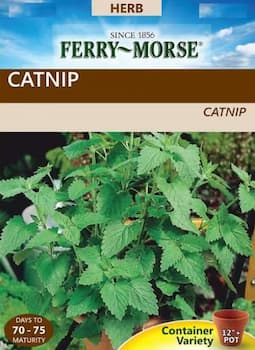
Yes, it is true! Cats love Catnip herbs! There was a time I did not believe it myself and thought it was just a fictional joke in cartoons. However, they love to nip the leaves. They love to roll in it. And sometimes cats take a nap in a bed of Catnip plants. They just plain love it. And you will too. So, if you’ve got cats, you’re going to love growing catnip!
A member of the Mint family, Catnip is a strong-smelling, aromatic herb. It has clusters of white or purplish-blue flowers atop toothy, heart-shaped leaves. There is also an uncommon yellow variety. The leaves have a lemon-mint flavor and scent. It is fun to grow for your kitties, and as an herbal tea for you.
Catnip is a perennial with some biennial varieties. It is native to Asia and Europe. In addition to cats, bees are also fond of Catnip.
Main Uses
The most popular use of Catnip is for cats. Rubbing oil on your cats’ toys will drive them wild.
With a lemony mint flavor, Catnip is also used in cooking and especially in herbal teas.
Catnip Plant Growing Specifications
Flowers Bloom: Spring through Fall
Flower Colors: Blue, pink, white, and yellow.
Days to Harvest: Harvest as soon as the leaves reach about 8 inches tall, usually by midsummer.
Plant Type: Perennials and a few biennial varieties.
Deer Resistant? Yes. Deer, rabbits, and other pests do not like the strong scent, taste, and texture.
Native To: Asia and Europe.
Botanical Name:Nepeta Cataria
Catnip Plant Propagation
Grow Catnip plants from seed. Sow Catnip seeds into your garden in the spring. Space seedlings or thin plants to 20″ apart.
When growing catnip, allow for plenty of space. It will overcrowd nearby plants in your herb garden, if allowed.
Final Plant Spacing: Space seedlings, or thin plants 18 to 24 inches apart, in rows 12 to 18 inches apart.
Days to Germination: 7 – 14 days.
How to Grow Catnip Herb Plants
Planting and Soil Needs
Catnip is easy to grow. They thrive in full sun or partial shade. They prefer average, well-drained soil. Plants are drought and heat-tolerant. They grow well with little attention and withstand crowding.
For optimal growth, mix compost into the soil at planting time. Additionally, if the soil is average or poor, then mix in a general-purpose fertilizer prior to planting.
Of course, when selecting a location, you have to decide if you want the stray and neighbor cats rolling your catnip. If not, then select a planting location that is fenced in.
Light Reqirement
Select a location in your herb or flower garden where your Catnip plants will receive at least seven to eight hours of bright, direct sun. For optimal growth, grow them in a location where they will receive full sunlight from sunrise to sunset.
They are tolerant of light, partial shade. In hotter regions, select a growing location that has partial sunlight or light shade during the mid-afternoon to protect it from damage by the hot rays of the sun.
With reduced sunlight, the plants grow slower and smaller, with less flowers.
Fertilizer Needs
Fertilizer is not usually required, except in the poorest of soils.
In poor soils, add a balanced general-purpose fertilizer once or twice during the growing season.
Water Needs
Give the plants with plenty of water during the growing season. Keep the soil moist but not wet and allow the soil to dry out between watering.
Other Steps
After the plants have grown a few inches, pinch back the shoots to promote bushy growth. It will first bloom in mid-summer. After harvest, trim back the plants again. With luck, you will get three harvests in a growing season.
Catnip are aggressive growers, crowding out other plants if given the chance. Give them plenty of space away from other plants in your garden. Or, better still, surround the plants, with deep border edging.
Harvest leaves as the flowers begin to bloom. Cut off the top leaves, stems, and flowers. They can be used fresh, dried, or frozen. Spread leaves out to dry in a cool and ventilated area.
Insects and Plant Diseases
Aphids, leaf hoppers, spider mites can attack the plants. Control them with insecticidal soaps or neem oil.
Powdery mildew and root rot can be an occasional problem. Treat powdery mildew with a fungicide. Avoid wet soils.
How to Harvest Catnip Leaves
Harvest Catnip leaves when they reach 8 inches long. Cut them near the base. They are usually ready to begin harvesting by midsummer.
Related Articles
Also, people who liked this article will also like: