This guide will help you learn how to grow cucumber plants better than ever. Commonly called “cukes”, they are a favorite garden vegetable. Most gardeners grow at least one variety, if not more. Although quite susceptible to insect and disease problems, these prolific producers are easy to grow.
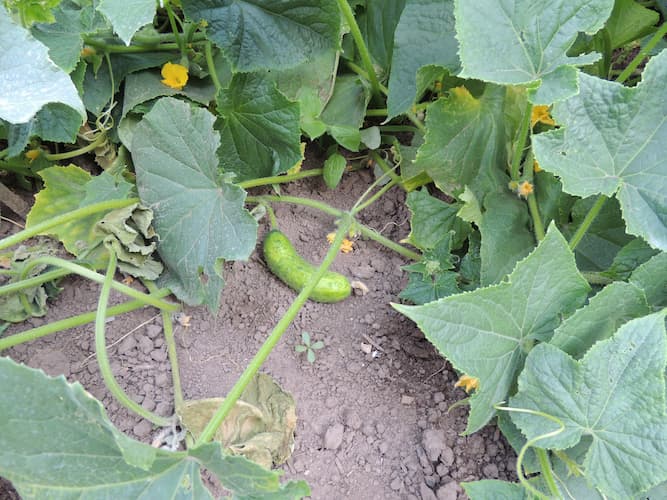
Cucumbers are vining plants. They are members of the Cucurbita family which includes pumpkins, squash, and gourds. They grow best when allowed to sprawl along the ground in your garden. This is because secondary roots will develop along the vine at the junction between the vine and the leaf. Secondary roots are a source of additional nutrients for your plant and fruits’ growth.
Garden Tip: Cover the secondary roots with soil. Then, keep the area watered. This promotes the growth of secondary roots.
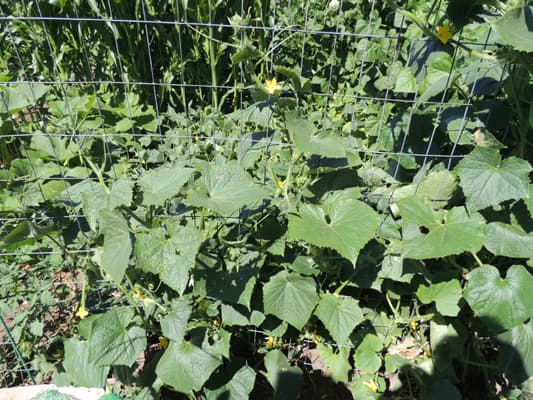
Space constrained? No problem! If you have limited space, cucumbers are very successfully grown in a small space, by training them up a fence or trellis. If a trellis or fence is your only choice, go for it. Without a doubt, you will not be disappointed.
Fresh cucumbers are great on vegetable trays with dip, sliced, or in salads.
Cucumber Plant Specifications
Days to Harvest: 50 to 70 days, depending upon variety and growing conditions.
Oriental Cucumbers – These are long and thin, with many over a foot long.
Nutrition Facts
One medium cucumber has approximately:
45 calories
11 g carbs
0 cholesterol
0.3 g fat
1.5 g fiber
2 g protein
6 mg sodium
Did You Know? Cucumbers consist of approximately 95% water
Light Requirement
Cucumbers grow best when planted in a location where they receive at least six to eight hours of direct sunlight. With full sunlight all day long, and optimal growing conditions, the plant and the fruit will achieve their optimum growth potential.
However, the plants wilt in high heat and can suffer sun scald to the leaves. So, if you live in a hotter area of the country, plant them where they receive a little shade from the hot afternoon sun.
How to Grow Cucumbers - Planting the Seeds
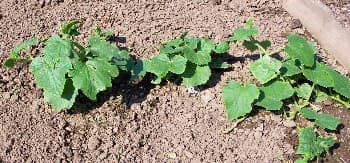
Plant seeds in rows or hills, planting them one to 1-1/2 inches deep. When planting in rows, sow cucumber seeds 2 ” to 3″ apart, thinning seedlings to 6″ apart. If you are planting in hills, plant four to five per hill. Cover very lightly with soil. Then, water the first day and if there is no rain, every two to three days until they germinate. After the seeds have germinated, keep the best two to three seedlings.
The plants can also be started indoors, 2-3 weeks before the last expected frost date for your area. Sow them in individual pots. We recommend using peat pots or peat pellets. Then, you can transplant them in the garden with little or no transplanting shock.
How to Grow Cucumbers
Cucumber plants require loose, well-drained soil. Plants grow best in full sun. Like other members of the Cucurbita family, they are big feeders. Early in the season, provide plenty of high nitrogen fertilizer. Switch over to a more balanced fertilizer, after the flowers begin to bloom. A side dressing of fertilizer and regular feedings of fertilizer will significantly help the health of the plant and the size of the harvest.
Provide lots of water, for fast growth. Importantly, keep the leaves dry when watering to help avoid plant disease.
Garden Tip: Cucumbers grow quickly. They are at their best when picked before they get too big. Encourage new fruit development by picking regularly. Do not allow the fruit to get overripe on the vine or production will slow down, or even cease bearing new fruit.
While cucumbers grow best on the ground, they also do well growing up a fence or trellis. They grow well on poles, too. Train young plants up the fence or trellis. After they get started, they will continue to climb on their own. Tendrils on the vine will attach themselves to their support, by curling around the support.
Garden Tip: Plant a second crop in early July. While the first crop will continue to grow, the second crop will be more vigorous and produce up to the first frost.
Cucumber plants do not like mid-summer heat and humidity. The leaves will wilt and can burn in the hot, midday sun. Using overhead sprinklers intermittently during the midday can alleviate the problem. However, do not use an overhead sprinkler late in the day or in the early evening. Water on the leaves at night can lead to plant disease. Shade covers are also effective. Or, you can grow them in an area that is shaded to partially shaded from the midday sun.
How to Grow Cucumbers - Insects and Pests
Like all members of the Cucurbita family, the Cucumber Beetle is the dreaded pest of cucumbers. Cucumber Beetles are either striped or spotted. They feed on the leaves of the plants and can cause even greater damage as they spread disease from one plant to another. They are effectively treated with most insecticides. Mild insecticides like Sevin are most commonly used for effective treatment.
Public enemy number one to the Cucurbita family is the Squash Vine Borer which bores into the vine, usually near the taproot, and will eat right through the vine. Once it gets inside, the only way to kill it is to surgically remove it. Cutting Squash Vine Borers out of your vine is done by slicing up or down from the entry area until you find the pest. Then, apply fungicide around the wound to minimize disease.
Squash Bugs will suck the juices of plants. If severe, the plant will die. More on Squash Bugs
Aphids and a variety of other insect pests can also cause problems, depending upon where you live.
As a member of the Cucurbita family, cucumbers are susceptible to the same diseases as pumpkin and squash. These include both fungus and bacterial problems. Powdery mildew is also a problem with cucumber plants. If not treated at the onset of powdery mildew, the disease can be fatal to your crop. Treat with fungicides at the first sign of problems, or just before hot humid weather arrives in your area.
Important Garden Tip: As was previously stated, keep the leaves as dry as possible when watering. Wet leaves promote powdery mildew and other plant diseases.
How to Grow Cucumbers - Harvest Time
Days to Maturity: 50 to 70 days, depending upon variety.
Once cucumbers begin to ripen, you can usually harvest them for several weeks.
The fruit is best while still young and tender.
Garden Harvest Tip: While we all love cukes, large ones are usually overripe and do not taste too good. They become sour and the seeds become tough and chewy.
Plant Hardiness
The plants are tender annuals. They are susceptible to spring and fall frost. Be prepared to cover them up in cold weather. They grow best in temperatures between 60 to 80 degrees.
The World's Biggest Cucumber
They grow them big in the United Kingdom. Here are two world records that will be hard to beat:
According to the Guinness World Book of Records, Sebastian Suski in Southampton, Hampshire, United Kingdom grew the longest cucumber. It measured 3 feet 8.64 inches long.
Vincent Sjodin, also from the United Kingdom, holds the world record for the heaviest cucumber. It weighed 29 pounds 8.2 ounces.