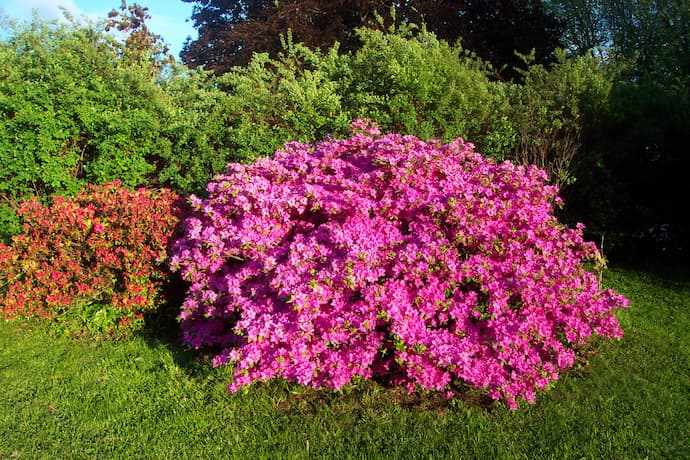
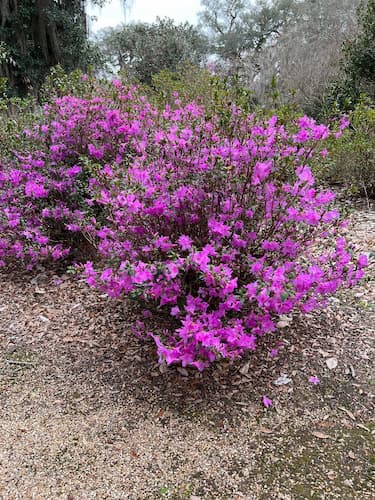
An Azalea bush is a popular flowering bush and foundation plant, with bright spring blooms. The bushes are native to Asia, Europe, and North America., Azaleas bushes are members of the Rhododendron family and share many common traits. The biggest difference between the Rhododendron plant and an Azalea plant is that the Azalea is a deciduous bush. It sheds its leaves in the fall. The Rhododendron plant is an evergreen. Use this guide on “How to Grow Azaleas” to help you grow a beautiful flowering bush!
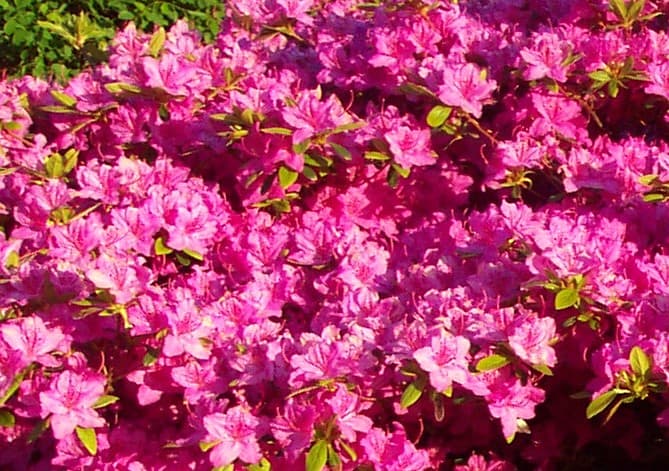
Fragrant blooms put on a show in the spring to early summer in a variety of bright colors.
Smaller in size, Azaleas are poplar potted plants as gifts for Easter and Mother’s Day. After blooms die, transplant azaleas outdoors.
Important Note: All parts of the Azalea plant are poisonous to people and pets.
Genus: Rhododendron
Azalea Plant Propagation
Azaleas plants are grown from seeds, cuttings, or grafting. Most home gardeners do not start Azaleas from seed. A plant grown from seed takes 2-10 years to produce the first bloom. Most homeowners buy established Azalea plants while in full bloom from a garden store. Azalea plants are often kept indoors, or on a deck while the plants continue to bloom. Then, after the flowers have died, they transplant them into a flower bed, or along a foundation.
Planting and transplanting Azaleas is best done in the early spring or early fall. When transplanting, replant bushes at the same level in the ground as they were in their original location. Smaller bushes transplant best.
Final Plant Spacing: Space plants 6 to 10 feet apart.
Days to Germination: Seeds sprout in 14 – 28 days.
Azaleas are acid-loving plants. They grow best in light shade and need protection from the midday sun and winter sun in hot areas of the country. They prefer moist, well-drained soil. Check the soil pH before planting, especially if planting along a foundation where soils tend to be more alkaline. Adjust the pH, as needed. Mix in plenty of inorganic matter, and well-rotted manure.
Selecting a location is important. Azaleas can be harmed or killed by sustained winds. Select a location out of the direct sunlight, if possible. Protection from the strong midday sun is important. Otherwise, the leaves dry out and burn. Northern exposures are best. It is also important to provide protection from winds. A low-lying area or one protected by a building or a hedgerow is a good choice.
Azaleas prefer a moist soil. It is important to water the plants during extended dry spells, even in the fall.
Using pine needles (acidic pH) as mulch works to help keep the soil moist, and maintain/add acidity to the soil. Roots are shallow, so mulching will help to keep the weeds down, without disturbing the root system.
Pruning or pinching back young Azalea plants helps to promote bushy growth. This gardening task should be done early in the spring. But, any pruning may result in cutting off next year’s blooms. If you prune an established bush heavily, it may not bloom again for two to three years. At the thought of losing next year’s blooms, we recommend avoiding pruning established plants at all. Just let them grow naturally however they want.
Winter Protection
Azaleas are susceptible to winter burn, caused by frozen ground, wind, and winter sun. As previously mentioned, the selection of a location for your Azaleas will help to avoid wind or sun damage. Some varieties are not as tolerant to extreme cold. If you are in northern areas of the country, ask the garden store about the cold hardiness of the variety you are buying.
You can further protect your bushes by providing windbreaks, especially during the winter months.