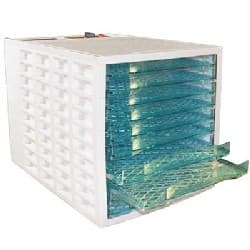
A long time before refrigerators and freezers were around, and long before people used canning methods to preserve and store food, dehydrating foods was a common practice. Food dehydration has been in use for thousands of years. Gardeners continue to dehydrate garden fruits and vegetables to preserve food for later use. In addition to describing the dehydration process, this guide also shows how to use dehydrated foods.
Dehydrating foods is still in common use, both by homeowners and commercial food suppliers. This fact is of no surprise. Food dehydration is safer than canning, is easy to do, and requires less space in storage.
Did You Know? Some commercial food supplies use chemicals and preservatives in their dehydrated products. Check the label before you buy.
Definiton of Food Dehydration
Food dehydration is a food preservation process in which most of the water content in foods is removed through drying while retaining flavor and nutritional value. This process dries food, without cooking it, inhibiting the growth of harmful bacteria and micro-organisms.
WHEW!! Now that we got the definition out of the way, let’s look into the fun and ease of dehydrating.
Gardeners love to dehydrate their favorite home-grown vegetables, fruits, and herbs. They control the quality and safety of their foods while growing them. Then, they also can eliminate the use of chemical additives and preservatives by dehydrating their home-grown garden goodies.
Also, Survivalists, campers hunters, and hikers are big fans of food dehydration.
How to Dehydrate Foods
It’s quite easy to dehydrate your favorite foods. You can use the oven or a Dehydrator appliance. Also, many people sun-dry fruits and vegetables.
Here are the basic steps:
Wash and clean the food.
Slice it into small pieces.
Set the proper drying temperatures (see below)
Drying time varies, depending upon what you are drying and how small the pieces are. The Instruction booklet of dehydrators will usually have a list of drying times.
After it has cooled, test a piece to see if it is hard, leathery, and not sticky to the touch.
Drying temperatures:
Meats and Vegetables: 145 ° F, or higher
Fruits and Vegetables: 130 – 140 ° F
Herbs: 100 – 110 ° F
Note: Dehydrated foods are often a darker color, and sweeter than the fresh product. Fruits especially taste sweeter.
How to Store Dehydrated Foods
Store dehydrated foods in an airtight, container. Place the container in a dark, dark place…never in sunlight. The room temperature is about right. Or, you can put them into your refrigerator, if you prefer.
Store dehydrated foods for up to a year. Yes, you may have heard that some foods can be stored for more than a year. But, we recommend a 1-year limit. And, after a year, you will be ready to dry and store your new crop!
How to Use Dehydrated Foods
There are many ways to use dehydrated foods.
To re-hydrated fruits and vegetables:
First, place them in a bowl of boiling water. Use just enough water to cover them. Then, leave them in the refrigerator overnight.
Many dried fruits are simply removed from storage and eaten. Some vegetables, like peas, are consumed similarly.
Remove dehydrated vegetables from storage and add them to soups, stews, and other cooked recipes.
Got a favorite garden recipe to share? Email it to us. Include your first name, last name (or the first initial of your last name), and where you live so we can give you proper credit and recognition. Contribute a recipe now