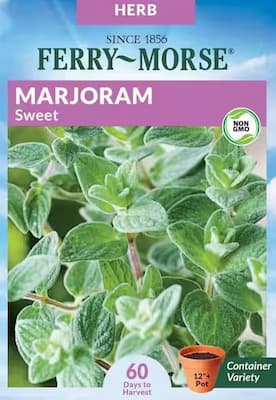
You may recognize Marjoram plants as a common herb in French cooking. While the Italian cuisine has Oregano, the French palette prefers the sweeter Marjoram leaves. Try growing marjoram herbs this year and taste the differences for yourself. Then, you judge which you prefer.
Marjoram is a very close relative of Oregano. It is a member of the Mint family and is native to North Africa and Southwest Asia. It thrives in dry, arid regions, and it grows two to four feet. In ancient Egyptian culture, it was a symbol of happiness.
Marjoram can be grown as a houseplant while still small. Place it in a sunny window. After you have enjoyed it all winter, plant it outdoors after all danger of frost.
If you have limited space, try this herb in a container on your patio or deck.
Medicinal and Culinary Uses
Medicinal Uses:
To ancient Egyptians, Marjoram was considered a symbol of happiness.
Culinary Uses:
Marjoram is used in cooking for soups, stews, vegetables, stuffing, salads, cheese, eggplant, and meats.
Aromatic Uses:
It has also been used in perfumes.
Nutritional Value
1 Tablespoon of Sweet Marjoram contains approximately:
5 calories
1 g carbs
0 cholesterol
0 g fat
1 g fiber
0.2 g protein
1 mg sodium
Sweet Marjoram Herb Growing Specifications
Flowers Bloom: Summer
Flower Colors: Pink, purple, and white.
Days to Harvest: The leaves are most flavorful just before the flowers bloom.
Plant Hardiness Zones: 9 – 11. Grow as an annual in other zones.
Ideal Growing Temperature Range: Daytime: 60 to 80° F.
Plant Type: Tender Perennial. It lives three to five years.
Deer Resistant? Yes.
Native To: Mediterranean and Western Asia.
Botanical Name:Marjorana Hortensis
Other Names: Knotted Marjoram, Sweet Marjoram.
Marjoram Plant Propagation
Marjoram plants are grown from seed. Get an early start on this popular herb by starting it indoors as a houseplant. Or, directly sow Marjoram seeds into your garden in the spring.
Sow Marjoram seeds early in the season and cover lightly with soil.
Seed Planting Depth: 1/4″ deep.
Final Plant Spacing: Space seedlings or thin plants 16 to 18″ apart, in rows 18 inches apart.
Days to Germination: 7 -10 days.
Ideal Germination Temperature: 65 to 70° F.
How to Grow Marjoram Plants
Planting and Soil Needs
Growing Marjoram is easy. Marjoram plants prefer full sun and well-drained soil. They will do well in average soils and tolerate dry soil conditions.
Mix compost into the soil at planting time.
The plants are tender annuals. As a result, they are grown as annuals in many parts of the country.
Light Requirement
Select a location in your garden where your Marjoram plants will receive at least seven to eight hours of bright, direct sun. For optimal growth and flavor, grow these sun-loving plants in a location that receives full sunlight from sunrise to sunset.
Fertiizer Needs
Marjoram plants do not require a lot of fertilizer. Rather, in average to rich soils, do not add fertilizer to this plant. As a result, it will produce a stronger flavor.
In poor soil add a balanced, general-purpose fertilizer once or twice during the growing season.
Water Needs
Being native to arid regions, Marjoram withstands droughts very well. Ideally, keep the soil slightly moist, but not wet. Add water to the roots of the plants during dry periods, once every week or two. Allow the soil to dry out before watering.
Other Steps
Weeds rob valuable water and soil nutrients. Therefore, keep young Marjoram plants well-weeded. Then, after they have grown several inches, apply a layer of mulch. This helps to retain soil moisture and gives the plant a neat and tidy appearance.
Prune away dead, damaged, or diseased leaves or stems. If you are growing the plant as a perennial, at the end of the season cut the plants back by 1/3 to 1/2.
As has been noted, the plants are tender annuals. Thus, they succumb quickly to frost and freeze in the Fall. They successfully overwinter only in warm areas of the country. In cooler regions, grow them as an annual.
Insect and Plant Disease Problems
Insect and disease problems are uncommon. However, they do sometimes occur.
Aphids, leaf miners, and spider mites are an occasional problem. Treat the plant with an organic insecticidal soap if problems arise.
Foraging animals do not bother these herbs.
Marjoram herbs can suffer from powdery mildew. Prune plants to improve air circulation. Use organic fungicides only if needed.
Marjoram plants are good candidates to grow in containers on your patio or deck. You can grow them indoors, too.
In addition to the “How to Grow Marjoram” steps above, here are a few additional steps for growing them in containers:
Grow them in containers or planters a little closer than the normal recommended spacing.
Select a sunny location on your patio or deck. When grown indoors, grow them in a sunny south-facing window as they need as much light as you can provide to them.
Deck and patios often get hotter than in your herb garden. Hence, in hotter weather, you can move the planter into shade in the afternoon.
It is important to have a drain hole in the container to allow excess water to drain from the pot.
The plant grows best in evenly moist soil. Keep an eye on the moisture level. Check the plants every few days, especially in extended periods of hot, dry weather.
When watering the plants, thoroughly wet the soil. Excess water will drain through the hole in the bottom of the flowerpot.
Nutrients in a container are limited. So, use fertilizer spikes to feed the plants. Or, apply a light solution of liquid fertilizer once every three to four weeks.
How to Harvest Marjoram Herb
Remove the flower buds as soon as they appear, because the leaves turn bitter after the flowers bloom.
Harvest leaves at any time after the plant has produced a few dozen leaves. Select the young, tender leaves, as they are best for flavor. Pick them in the morning when the oils are strongest. Spread leaves out to dry in a cool and ventilated area. Then, after they are completely dry, store them in an air-tight container out of direct sunlight. Leaves can also be put in the freezer for later use.
Related Articles
Also, people who liked this article on “How to Grow Marjoram Plants” will also like: