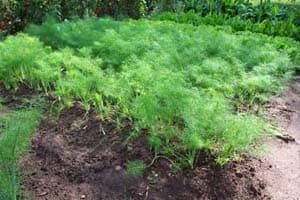
While classified as a herb, Fennel plants are a popular European vegetable. Native to the Mediterranean region, the bulbous base and stalk of this plant is popularly eaten raw like celery, cooked, or boiled. Closely related to Parsley, Fennel is popular in Italian and other Mediterranean recipes. Also called Florence Fennel or Finuccio, it is easy to grow and very hardy, surviving in your garden, well after the first frost. With bright green, fern-like leaves and aromatic yellow flowers, this plant will grow three to four feet tall. Plant this tall plant in the back of the herb garden, or in your vegetable garden.
The plant foliage and seeds have an anise-like flavor.
Culinary Uses
Having an Anise-like taste, the bulbs and stalks are eaten raw like celery. And they are used in a variety of Italian and other ethnic foods.
The leaves are used in sauces, soups, and condiments.
The oil is used to flavor liqueurs, candy, fish, and medicine. Oil of Fennel is used in soaps, too.
Nutritional Value
1 cup of sliced Fennel contains approximately:
27 calories
6.4 g carbs
0 cholesterol
0.1 g fat
2.7 g fiber
1.1 g protein
50 mg sodium
Fennel Plant Growing Specifications
Days to Harvest:
Leaves – 55 to 65 days.
Bulbs – 80 to 100 days.
Seeds – – 90 to 120 days.
Plant Height: Three to six feet tall.
Light Needs: Full sunlight. Light partial afternoon shade in hotter regions.
Grow Fennel plants from seed. Directly sow Fennel seeds into your garden as early in the season as the ground can be worked. Sow seeds and cover with 1/4″ of soil.
Start a new planting in mid-summer, to harvest in the fall.
Seed Plating Depth: 1/4″.
Final Plant Spacing: Space seedlings or thin plants 10-12″ apart, in rows 18-24 inches apart.
Days to Germination: 14 – 20 days.
How to Grow Fennel Herb Plants
Planting and Soil Needs
Fennel is easy to grow. The plants grow best in cool weather. These hardy plants make a great Spring and Fall crop.
The plants prefer full sun and well-drained soil. They do their best in rich soils. Thus, mix plenty of compost into the soil at planting time. Also, mix in a balanced, general-purpose fertilizer.
Light Requirements
Select a location in your garden where your Fennel plants will receive at least seven to eight hours of bright, direct sun. For optimal growth, grow them in a location that receives full sunlight from sunrise to sunset. Insufficient sunlight results in leggy plants and small bulbs. The flavor is milder, too.
The plants are tolerant of light, partial shade. In hotter regions, select a growing location that has partial sunlight or light shade during the hottest part of the day. Too much hot, intense sunshine can cause the plant to bolt without producing a bulb.
With enough sunlight, the plants grow slower and smaller, producing fewer flowers and seeds.
Fertilizer Needs
Fennel plants are not heavy feeders. In rich soils, you may not need any extra fertilizer at all. In average or poor soil, apply a balanced general-purpose fertilizer apply a general-purpose fertilizer once or twice during the season.
Water Needs
Keep the soil moist but not wet during the entire season because the roots can rot in soggy soil.
Allow the top of the soil to dry out between watering. Water them during dry periods, once or twice per week. Importantly, apply water directly to the roots, and try to keep the leaves dry.
Other Steps
Weeds rob valuable water and soil nutrients. Therefore, keep young Fennel plants well-weeded. Then, after they have grown several inches, apply a layer of mulch. This helps to retain soil moisture and gives the plant a neat and tidy appearance.
Prune away dead, damaged, or diseased leaves or stems. If you prune them during the season, then the plant will become bushier and thus more susceptible to plant disease. Instead, allow good air circulation around and through the plant.
Do not pull these plants up in advance of the first frost. They are very hardy and should continue to thrive and grow, even after several hard frosts.
Garden Tip: Remember to save a few seeds for next year’s crop.
Insects, Animal Pests, and Plant Disease
A variety of insect pests afflict the plants. Some of the most common insect pests are aphids, caterpillars, cutworms, slugs, snails, and whiteflies. Treat most problems with an insecticidal soap. Do not use chemical insecticides on Fennel plants. Pick caterpillars off the plant by hand. Use a cutworm collar around the base stalk of the plant. Treat the area with garden safe slug and snail pellets.
Foraging animals leave the pant alone.
The plants are susceptible to a wide variety of diseases. They include fungal disease, downy and powdery mildew, blights, root rot, and rust.
Treatment can be problematic, as you don’t want to put harmful fungicides on the herbs you eat. Rather, seek to avoid plant disease by providing good ventilation, keeping the leaves dry, if possible, and planting in well-draining soil.
Harvest Fennel leaves at any time up until when the flowers bloom.
Harvest flowers when they are in full bloom.
Collect the seeds after the flower head has died and the seeds have formed. Extract seeds and dry them in a cool, dry location. Then, store them in a sealed container out of sunlight.
Finally, harvest fennel bulbs when they reach tennis ball size or bigger. Pull every other one out as needed, to allow those remaining to grow even bigger.
Related Articles
Also, people who liked this article will also like: