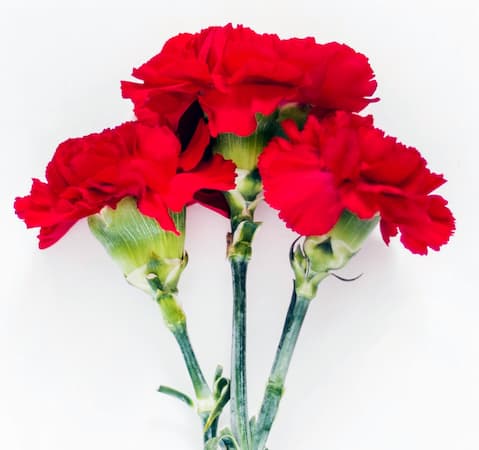
Carnations are very popular as boutonnieres, in corsages, bouquets, and a wide range of floral arrangements. They grow big, full blooms on strong, straight stems. Their blooms last a long time. And, now you can use this guide to learn how to grow carnation flowers. Then, you can grow your own boutonnieres. They come in several colors and are popularly dyed to just about any color imaginable. But, before you begin to give them away to someone, it is important to know the carnation color meaning and symbolism. You don’t want to send the wrong message.
Carnations are fairly easy to grow. I am sometimes amazed that more people don’t grow these great and versatile flowers. Plant carnation flowers in flower beds or containers near where people pass by or congregate. This allows people to enjoy the spicy clove-like fragrance.
Did you know? Carnations are also called “Pinks” in the garden. To create a carnation from the multiple flowers on the stem, pinch off all flowers on the stem except the center or terminal bud.
Florists tint Carnations into any single or multi-color imaginable for everything from weddings to Saint Patrick’s Day and proms. Florists use white carnations for tinting.
Cut carnation flowers are long-lasting in vases. They put on a showy display by themselves or mixed among other cut flowers.
Hardiness Zone: 7 – 10. This versatile plant grows well in most hardiness zones.
Toxicity: They are harmful to some animals.
Native To: Europe
Plant Type: Annuals and Perennial
Botanical Name:Dianthus
Are Carnation Plants Edible?
YES!!
Carnation flowers are edible. Leaves and stems are not. People who have tried them, describe them are sweet with a nutmeg or clove flavor. Others have called them spicy, tangy, or peppery. Try them and let us know how they taste to you!
Carnation flowers are consumed in a variety of ways. Here are some of them:
The French make liquor from it.
Sauté it and mix it with vegetables.
Salads
Soups
Candied petals are used with ice cream, and to decorate cakes and cupcakes.
It is a colorful garnish.
Carnation Plants Medicinal Uses
Brew the flowers in a tea to relieve anxiety and nervousness.
Use it as a stress reliever.
It is used to treat endometriosis.
Relieve constipation.
Got insomnia!? Try a tea with carnation flowers.
Carnation Color Meaning and Symbolism
Like rose colors, the color of carnations represents different meanings. Here is what the color of carnations symbolizes:
White represents chastity, innocence, and purity. It is also a sign of good luck.
Red carnations are a symbol of friendship, admiration, and love.
Dark red represents deep love and affection.
Pink carnations are given as a sign of gratitude or thankfulness.
Purple symbolizes eccentricity or capriciousness.
Yellow carnations represent disappointment or rejection.
In addition to these colors, florists tint or dye carnations a wide variety of colors. For example, on Saint Patrick’s Day, they are dyed green to celebrate the holiday. You’ll find green carnations everywhere you look.
Carnation Flower Plant Propagation
Carnations are grown from seed. Carnation seeds can be directly seeded into your flower garden or started indoors for transplanting later. If planting outdoors, sow them early in the spring. But, make sure the soil is not too wet.
When sowing seeds, cover them very lightly with 1/4 inches of fine soil. Space seeds or seedlings 12″ apart.
If you are growing perennials, you can propagate them from cuttings or by division. Propagate plants by plant separation in the fall months.
The plants grow best in full sunlight. Give them at least six hours of direct sunlight, or there could be fewer and smaller blooms. They tolerate partial sunlight. In warmer regions, grow them in a location where they are shaded from direct afternoon light when the sun is the brightest and hottest., as the sun could cause the colors to fade somewhat.
Also, the plant can wilt in high temperatures, especially if insufficient water is in the soil.
How to Grow Carnation Flower Plants
Carnations plants are very easy to grow. Select a location where they can grow undisturbed for many years. They grow best in full sun. The plants prefer rich, well-drained soil. Mix in a generous amount of compost to the planting site.
The plants are somewhat drought tolerant. They only need additional water during dry periods, once or twice per week.
Add a general-purpose fertilizer once or twice a month. Use a slow-release formula. Too much nitrogen in the soil can negatively impact the production of blooms. Just before the blooming period, switch to a fertilizer high in phosphorous.
Carnations grow fairly tall, making them great for borders or edging. Space plants 12″ apart.
Established Carnation plants grow well and bloom from the spring and throughout the summer. The perennial varieties are hardy. They will withstand light frosts before going dormant for the winter.
Pruning Carnation Plants
Prune dead, diseased, and unsightly leaves and stems as needed. Deadheading spent blooms helps to prolong the blooming period. Cut the stem back several inches.
After the blooming period is over, trim the plant to maintain a shapely and attractive appearance.
Hardy perennial varieties of carnations overwinter well. Cut the plant down to just a few inches from the ground. Perennial varieties should be mulched for winter protection against extreme cold temperatures.
Insects and Plant Disease
Lorem ipsum dolor sit amet, consectetur adipiscing elit. Ut elit tellus, luctus nec ullamcorper mattis, pulvinar dapibus leo.
Carnations have few problems with insects and disease. Aphids and spider mites are an occasional problem. Treat them with insecticidal soap. Cutworms can also affect the plant. Pick them off the plant by hand and use plant collars.
Plant fungus and wilts can occur, especially in hot and humid weather.
If insect or disease problems occur, treat early with organic or chemical insect repellents and fungicides as appropriate.