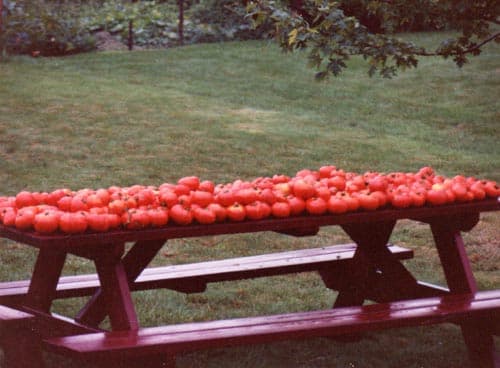
People greet harvest time with mixed feelings. The joy of gathering a bountiful harvest is certainly a joyful and most gratifying experience. While harvesting There is also a small sense of sadness, as we reach the end of a gardening season that brought new learnings and much satisfaction. Next spring feels a long way away. And indeed, that “just around the corner” feeling will have to wait until January, when seed catalogs arrive in the mail!
From a flavor and texture standpoint, most fruits and vegetables are at their best when they are still young. Most can be picked when small, and help to thin out the harvest, as well as to extend it. In addition, many fruits are best picked before they fully ripen. This helps to avoid damage during transit and to last longer during storage. Peaches are a good example, as they are best picked when still hard or firm. They ripen to a soft and sweet-tasting treat if left out on a counter for a few days. If you pick peaches when they are ripe, they will keep for only a few days and are easily bruised.
While we often think about harvesting in the fall, harvesting vegetables and fruits goes on all season long. It begins with the first asparagus spears, progressing on to early fruits and vegetables, and all the way to pumpkin pickin’.
Let’s focus on the fall harvest and things you can do to prolong the harvest, as well as properly store and keep it in good condition. Note that many flowers, fruits, and vegetables have specific peak harvest times and storage methods. Make sure to read further on each specific one as needed.
Harvesting Vegetables and Fruits - Keys to Long Term Storage
One recent spring day, a neighbor of mine walked over to visit me, as I was planting vegetables for an early crop. He wanted to show me (as in show off) what was in a box that he was carrying. It was one-quarter full of small, yellow tomatoes. Most of them were in good shape! He had stored these tomatoes from late September to mid-April and had been eating fresh tomatoes all winter! Granted, this was a long keeper variety. But the point is vegetables under the right conditions can last for quite a while.
Here are some pointers to maximize the storage times for your crop:
Know when to pick fruits and vegetables
Most vegetables should be picked before they peak. Tomatoes and peppers are good examples. They will slowly ripen off the vine. Some vegetables need to “cure” or ripen and harden before storing. A good example of this is pumpkins and gourds.
Clean and sort
Before storing vegetables, wash thoroughly with water. Remove any that are damaged, have soft spots, or holes in them. The old saying “one bad apple spoils the whole bushel” is quite true.
Eliminate Bacteria
Bacteria is what spoils fruit and vegetables in long-term storage. After washing them, rinse them in a light solution of chlorine and water. This works well for winter squash, pumpkins, tomatoes, peppers, other vegetables that have hard skin. Use one part chlorine to twenty parts water. Let them dry thoroughly before putting them away. Fruits and root crops do not usually need this extra protection. It is not recommended for thin-skinned vegetables, leaf crops, or others with a short shelf life.
Spread them out
When putting fruits and vegetables away for long-term storage, do not pile them high and together in one big container. Several smaller containers are best. Keep them from touching each other, if possible. If one does go bad, the bacteria or fungus has a harder time spreading if the fruit is separated.
Optimal Storage conditions
Most fruits and vegetables store longer if kept in cool, dry conditions. Many will last for months under the ideal conditions. Cold storage is used for many crops and remains fresh for use weeks and months later. Each fruit or vegetable may have a different ideal temperature. Local cold storage companies will know the proper humidity and temperatures.
A few vegetables will keep for several months out of the refrigerator. These include potatoes, onions, garlic, and winter squashes. For home storage, the general rule of thumb is cool, dry, and dark conditions are the best.
More Resources Related to Storing Vegetables and Fruits