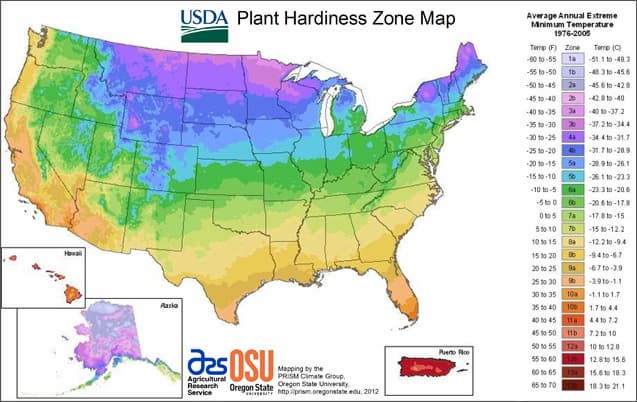
There are thousands upon thousands of varieties of plants. Not all of them will thrive in a given type of climate. Cactus like the heat and dryness of semi-arid areas. Palm and orange trees need lots of heat and water. Lettuce and cabbage do well in cooler weather. Plant hardiness zones define the environment for particular groups of plants. It is a gardener’s tool for selecting the proper plants that will thrive in the area you live in. By knowing the hardiness zone you live in, you can select the right plants to grow for your area. Frost-free dates for planting are the identify the last expected frost in the spring. This is the date gardeners can safely plant frost sensitive plants outdoors.
Plant Hardiness zones represent the average low-temperature range for an area.
Why Are Plant Hardiness Zones Important?
So why is this important? Simply because each plant has a minimum temperature range in which it can survive during the winter months. Once you know your range, you can select perennial plants that will survive the winters in your area.
Frost Free Dates
The first and last frost dates are critical dates for those of us who plant tender annuals. It is crucial to know the first and last frost-free dates in your area.
It is important to note that these dates can vary significantly, even in a small area. For example, if you are right by a large lake, in a valley, or high up on a hill, overnight lows will vary. Check with local growers and your local garden stores.
Always be vigilant of tender annuals on cold nights. Be prepared to cover them up.