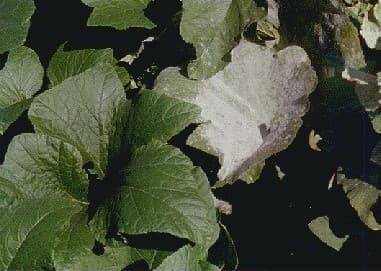
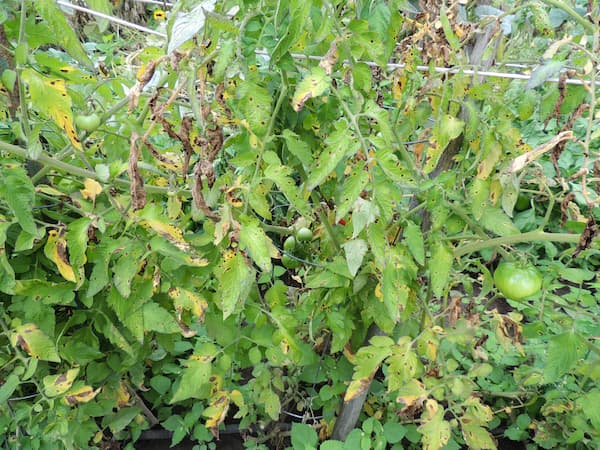
The subject of identification plant disease and how to treat itis a topic no gardener wants to talk about. If you’re talking about it, chances are you’ve got a problem in your garden. Hopefully, you’ve spotted the problem early. The earlier, the better.
There are hundreds upon hundreds of diseases. Some broadly affect many types of plants- trees, flowers, vegetables, shrubbery, and anything else. Yes, like with humans, plant diseases do not discriminate. They even attack weeds. Other diseases affect more specific types of plants or classes.
Listed below are some things which will help you to manage your disease problems.
Types of Plant Disease
Bacterial
Virus
Causes of Plant Disease
In the plant world as in the animal world, disease occurs when a plant is exposed to a virus or a bacteria. Exposure can occur in a variety of ways as described below. Like the animal world, there is a lot you can do to help avoid it. Additionally, you can help your plant to fight and overcome an illness. Once infected, early treatment can help your plant to overcome this problem. Unfortunately, not all diseases are curable.
Spreading Plant Disease
Most often diseases are either airborne or transmitted by insects and other animals. In the case of airborne bacteria and viruses, the only way to stop it is to take away its breeding ground or treat it with chemical fungicides.
For transmitted diseases, much can be done. Insects often pick up spores, and spread them, as they move from plant to plant. Often, the easiest way of controlling diseases is to control insects.
The disease can also harbor in your soil, and especially in mulch and compost. Plowing or tilling infected plants into your garden, can cause the disease to overwinter in the soil. Crop rotation is an important part of your disease prevention program. Make sure you do not plant the same plant family in the same spot year after year. Putting diseased plants into your compost pile can also help diseases to spread from year to year. The control method here is quite simple: throw away any diseased plants.
Controlling the Spread
Remember The Golden Rule: An ounce of prevention is worth a pound of cure.
There is a lot you can do to control the spread of disease. Fundamentally, this starts with understanding the causes and how it spreads. (as discussed above) Therefore, it is equally important to understand the environment that nurtures diseases and to take their environment away.
Here are some things to minimize the environment that they thrive in:
Be vigilant for early identification of plant disease.
Provide good air circulation. Do not space plants too closely.
Do not water at night. Water, heat, and humidity promote diseases. Water at the roots, if at all possible.
Rotate your crop. Diseases can overwinter in your soil and the remains of diseased plants that are tilled into the soil.
Discard diseased plants. Do not put them into the compost pile as you could infect next year’s crop.
Select disease-resistant varieties. The inexperienced grower will benefit most by selecting varieties that are resistant to a variety of plant bacteria and viruses.
Promote healthy plants. A healthy plant is more able to ward off any problem that may arise.
Treating Plant Disease
If and when problems arise with your plants, do not wait. Treat them immediately with a fungicide. If the plant does not respond to treatment, remove and destroy it. Not all plant diseases are curable. As mentioned above, do not throw diseased plants on the compost pile.
In future years, look for varieties that are disease resistant, even if it costs a little more. Rotate your crops each year. Proper rotation is a three to five-year cycle.