Home Garden Organic Compost and Mulch
Garden compost and garden mulch are two of a gardener's best friends. They
are beneficial for strong and healthy plants. They significantly increase
the productivity of your garden. Their long lasting benefits save time and
effort in all types of gardens. There are many forms of compost and mulch.
Some are organic, while others are artificial.
Be a soil saver..... start organic home garden composting today. Once you
do, you can throw away, or drastically reduce, the use of chemical fertilizers.
It helps save the environment, and it saves you $$$.
Did you Know? Mushroom compost is a highly valued soil amendment.
Do you know what mushroom compost is made of?
Find out now
The Composter's Motto: Let it rot!
What's the Difference between Compost and Mulch?
What is Compost? Garden compost is any kind decayed, organic
plant waste. It's nutrient rich composition, acts as a natural, healthy,
organic fertilizer for your plants. "Composting" is the process where organic
plant matter rots and decays, and allowing it to break down through the natural
process of decomposition. Composting occurs over a period of time, aided
by of natural bacteria, air, worms, heat, and water.
Compost is made from organic matter. It can include weeds, grass clippings,
hay, seaweed, garden waste, kitchen scraps, tree leaves, sawdust, or
branches, to name a few.
When we talk about composting, we are referring to the composting of plant
matter. Animal manure is also composted. Manure almost always includes a
mixture of straw, sawdust or other bedding, along with the animal manure.
More on composting manure.
What is Mulch? Garden mulch is any material placed around
plants in your garden, as a protective covering for the purpose of:
-
Reducing weeds around plants
-
Increasing or decreasing soil temperature
-
Retaining soil moisture around the plant
Mulches can be organic such as compost, wood chips, grass clippings, or hay
to name a few. Or, they could be inorganic such as black plastic, newspaper,
pine needles, or even aluminum foil. The benefit of organic mulch,
is that it also enriches the soil. In-organic mulches can be much more efficient
in keeping out weeds. But, they are of no benefit to the composition of your
garden soils.
Composting Tips: If you recently sprayed or applied chemicals to your
lawn, do not use the grass clippings in composting . Those nasty chemicals
are not organic. You don't want them in your vegetable garden.
How to Make Compost:
Home garden composting is easy. There is not much you can do wrong long term,
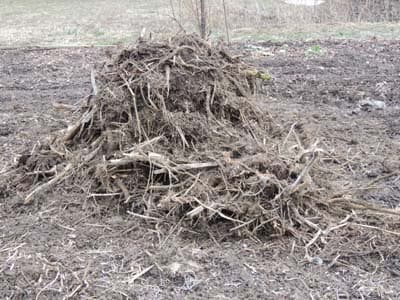
to the compost pile (also called the compost heap) Pile up any organic matter,
and it decomposes over time. If you simply pile plant waste onto a heap,
it will decompose.....eventually. Most gardeners prefer to speed up the
composting process, and avoid the pitfalls of bad odor and attracting unwanted
pests.
The key ingredients to successful garden composting are:
-
The right mix of materials containing Nitrogen (Greens) and Carbon (Browns).
See What to Compost
-
Microbes, which break down component materials into rich compost.
-
Air
-
Moisture
-
Temperature
A well maintained and active composting pile, converts organic material to
compost in as little as thirty days. Left to nature, a compost heap can take
from several months to a year to completely decompose. The byproduct of active
decomposition, is heat (and sometimes, odor). Have you ever seen a large
twenty foot pile of wood chips, at your local nursery in the middle of the
winter? You may have observed it "smoking". A composting pile can actually
become so hot, that it ignites. It commonly occurs in large, town or industrial
composting.
Composting Basics:
-
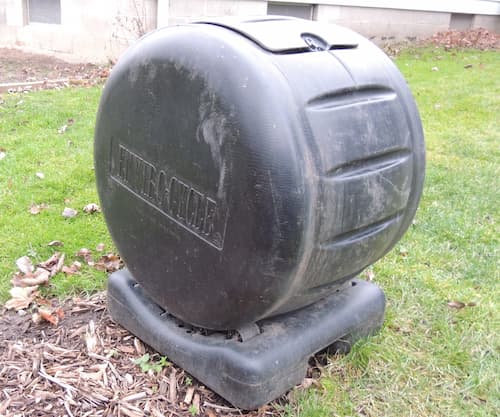
If you are not using a composter
or a compost tumbler, select
an area to create your pile.
-
Many people opt to close in their pile with fencing, or acquire a home composter
or bin. Home composters and bins are neat and more aesthetically pleasing,
than a pile of weeds and decaying grasses.
-
Add organic matter from your garden and yard.
-
Include vegetable and plant waste from your kitchen, including egg shells,
coffee grounds, tea bags, spoiled vegetables and fruits, etc.
-
If possible, alternate layers of green and brown waste. This helps the composting
process, and aids in decomposition.
-
Keep the pile moist, but not wet.
-
Turn the pile over from time to time, to maximize air circulation to the
bacteria and microbes that "eat" and convert your pile into rich compost.
This is where composters, and especially
compost tumblers excel.
-
Use the compost after it has almost completely turned into soil. It is rich
in nutrients and minerals.
-
Apply compost liberally around your plants as a mulch, or mix it into the
soil.
Did you know? Along with heat, odor is another common by-product of
the composting process. Keep odor to a minimum, by turning the pile regularly.
One of the most common culprits, is grass clippings piled too thickly. Mix
together well.
Composting Do's and Don't's:
-
Stir the pile frequently, to allow air penetration.
-
Do not put animal remains, meat, or fats in the pile. They attract unwanted
"critters"
-
Keep the pile moist.
-
Do not put grass clippings too thickly, they will smell as they decay.
-
Chip or shred larger branches and plant stalks. The more area bacteria has
to work, the quicker the decomposition.
-
Do not put diseased plants of any kind into the compost pile. Plant disease
overwinters in a pile, and re-infests your garden next year.
Speeding up the process:
-
Stirring the pile, speeds up the composting process.
-
Keep it loose, to allow air flow.
-
Red worms speed up the composting process. Add them to your pile once, and
they should reproduce in big numbers. You may not need to buy them again.
Tip: Do not put worms into a composter... the heat inside is too hot
for them.
What to Compost/Compost Materials:
In general, you can use most vegetable and plant matter. This includes
yard and garden waste, weeds, leaves, branches and twigs, and kitchen scraps.
Use a mixture of green and brown matter. Green matter, like grass clipping,
is high in nitrogen. Nitrogen gets the compost "cooking", or decomposing.
For an extensive list of what compost materials to use, and what not to use,
see What to Compost.
Related Topics:
Composting manure - Manure is a great compost for
your garden soil.
Compost Honey Hole - Enriching
your soil reaps huge rewards.
Mushroom Compost
More
on Composting at Garden Hobbies
Compost Tea a great liquid fertilizer. And,
it's free! Use Compost Tea on indoor and outdoor plants.
About Composters - learn about
compost tumblers, compost bins and their features.
Buy Composters - See the top composters and compost tumblers
on the market.
More Information:
Buy Flower, Vegetable and Herb Seeds Ferry Morse,
Livingston and Lilly Miller seeds. We've got better quality, better prices.
Quality
Bulbs and Perennials - Great deals on a huge selection flower bulbs
and perennials.
Are birds and graden pests feasting on your plants?
Stop the freeloaders!
Buy the Garden Buffet Buster now! |
|
Seaweed & Fish Fertilizer
Shop For:
Gardening:
Flower Seeds
Vegetable Seeds
Heirloom Seeds
Herb Seeds
Organic Seed/Supply
Flower Bulbs
Cold frames
Composters & Bins
Fertilizers
Greenhouses
Houseplants
Planters
Raised Beds
Garden Supplies
Yard & Deck:
Grills
Hammocks
Hose Carts/Reels
Outdoor Storage
Solar Lights
Pest Control
Seasonal /Holiday:
Halloween
Thanksgiving
Christmas
Other Holidays
Carving Stuff
Decorations
House Flags
Jello Molds
Lights
Other:
Food Processing
Kitchen/Party Supply |