looking to learn how to grow eggplants in your garden? You’ve come to the right place. They are easy to grow. You can even grow eggplants in pots on your patio or deck. And, you’ve got a variety of eggplants to choose from. Many people didn’t even know that there is more than the traditional purple-black type.
The plants and fruit are easy to grow. It is one of the more prolific producers in the vegetable world. On top of that, it is great in recipes. Eggplant Parmesan is one of the better-known of all Italian recipes. In addition, it is a very popular European vegetable, especially in the Mediterranean region.
Eggplant is easy to grow. It is grown and enjoyed all over the world. There are website links and information in many places among them India, Egypt, China, Japan, Indonesia, Italy, France, and dozens more countries, too. A web search will result in eggplant recipes from all corners of the globe.
If you are space constrained, you can grow eggplant in pots on your patio or deck. See below for how to grow eggplant in pots.n
Varieties of Eggplant
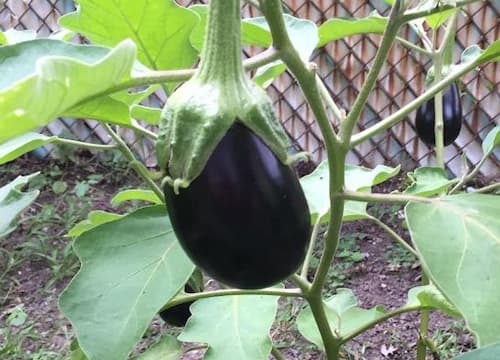
The most common varieties are dark purple, sometimes almost black colored Eggplants, which are either globe or round shaped.
Also, they can be slender and straight.
Other less common eggplant varieties can be:
White
Scarlet (reddish)
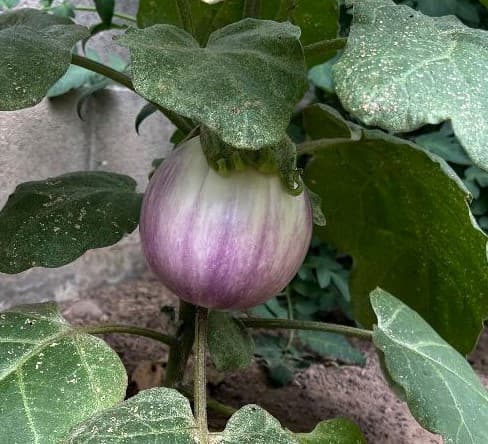
Purple and White
Yellow or golden.
An Ornamental Eggplant is also of great interest. It’s edible, and the plant is a unique “conversation piece” in your garden.
How to Grow Eggplant - Planting Seeds
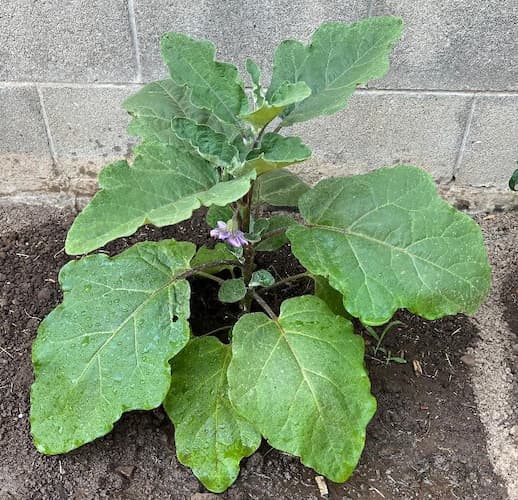
Grow eggplant in full sun. The plants like hot weather. Plant after the last day of frost for your region. In addition, plants often are started indoors six to eight weeks before the last frost date and transplanted as the weather warms in the spring. The second setting in mid-summer is often started outdoors.
For outdoors planting, select a sunny location. Sow eggplant seeds very shallow, about 1/4. You can even set the seeds on the soil, and lightly water them in. If you start plants outdoors, you can also sow seeds in a seedbed and transplant seedlings to the desired location. Space plants 1 1/2 feet apart. Space rows 2 to 2 1/2 feet apart.
How to Grow Eggplant - Season Long Care
Grow Eggplant in full sun. Before planting, add plenty of compost and manure, as eggplants thrive in rich soil. Keep the soil moist to promote maximum growth.
Days to Maturity: Approximately 55 to 70 days for most varieties, with some little longer.
Begin to harvest eggplants as soon as the first fruit reaches a desirable size. Keep picking them and do not let them get too big. By continuous harvesting, you will encourage more fruit to set all the way to frost.
Plant Hardiness
Eggplant is a hot weather crop. And, it is susceptible to cold temperatures and frost. Delay planting in the spring until nighttime temperatures are in the upper forties. If you start the season early, use hot caps for cool nights to help the young seedlings get off to a good, healthy start. Also, if your crop is still producing in the fall, cover them on cold evenings to extend the harvest.