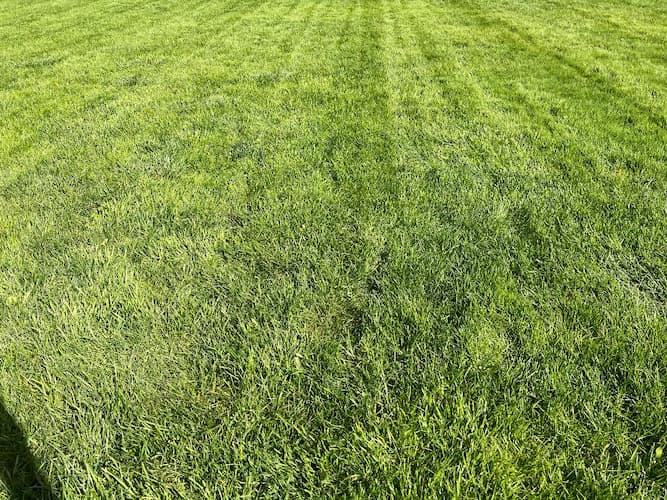
New Lawns
Establishing a new lawn is a simple task. Establishing a lush, healthy lawn,
largely free of weeds and submerged rocks, is a sizable endeavor. The result
is well worth the effort. The effort is not one of complexity. It's is a
function of time and effort. The end result is a lawn that looks like a million
bucks, and is easier to maintain. Remember, it is easy to keep a good lawn
in shape, than it is to put a poor lawn back in shape.
Here is what you need to create that great lawn:
Soil Preparation
Creating a great lawn begins with a soil test. Your local County Extension
Service (CES) can do this test for you for a small fee.
Find your local CES now.
While awaiting the results of your soil test, prepare your soil by raking
and leveling it. You should grade it away from your house, shed, and other
objects. During raking and leveling, be diligent in removing stones, rocks,
and other objects. Look for, and remove rocks and debris below the surface,
ideally to a depth of six inches. This is a "pay me now or pay me later"
chore. Grass roots will not be able to grow and nourish the grass, if a rock
is just below the surface.
Upon receiving the results of your soil test, follow the recommendations
from the test. If your soil's pH is acidic, the pH needs to be raised. Add
powdered or pelletized limestone, commonly called lime. If the test shows
you soil to be to high pH (Alkaline), it needs to be lowered. Apply powdered
sulphur.
Spread fertilizer in the area to be seeded. Look for a fertilizer that is
high in Nitrogen, to fuel new seedling growth. Lawn and garden stores carry
blends specific for new lawns.
Grass Seed Selection and Application
Selecting the right grass seed is important. Different types of seed are
suited for sun, shade or heavy use areas. There are also different types
of seed for hot versus cool climates. Selecting
the Right Seeds.
For most uses, we recommend a blend of seeds. This helps to overcome the
effect of changing weather, type of use, and guards somewhat against disease.
Read the directions on the seed package and your spreader. We recommend you
cut the application rate in half and go across your lawn twice, once north-south
and then east-west. This criss-cross pattern helps to assure a more consistent
application rate, and that you did not miss an area.
Some people will provide a light layer of straw over the lawn. This helps
keep the seed moist and the hot sun off the seed, encouraging germination.
Straw is most frequently used in warmer weather. If you use it, remember,
you will have to rake it up.
Seeding new lawns in the spring or fall is preferred. But you can seed your
lawn in the summer if you have the time to give it frequent watering. The
trick is to keep the seed moist, not wet.
After the lawn has come in, reseed bare and sparse sections. The grass will
quickly spread and thicken to fill thin areas of the new lawn. Overseeding
sparse areas will help to fill in those areas quicker.
Wherever you see a bare spot, dig down and see if a rock is there. If so,
remove it, and refill the hole. Then, reseed the spot.
Keep off the lawn as it begins to germinate and grow. That goes for the kids,
the pets, and you.

Water
Grass seed needs to be kept moist to germinate. Sitting on or near the surface
of the soil, it can dry out quickly. There is no need to water deeply. But
you do need to water frequently, once or twice a day in dry weather.
After the seed sprouts, it's roots will be shallow at first, but grow deeper
with time. Water a little deeper, but less often as the lawn grows.
More on Water
The First Mowing
The first mowing is a real, indescribable joy. Later mowings will not result
in that same feeling of elation, so enjoy the feeling while it lasts.
More on Mowing
Garden Scooter - It's easier on your back and knees!
Buy Flower, Vegetable and Herb Seeds Finest quality
Ferry Morse Seed, America's oldest seed company with their famous "guarantee
to grow".
|